Value-First Data
Unified Revenue View Part 4: Scope Decision
Watch Episode →

Value-First Data Episode 9 - Champion Stage: Let Leading Voices Lead
Generated via AI Transcription (Gemini)• 90% confidence
[00:05] **Introduction** Chris Carolan: Good afternoon and good evening, LinkedIn friends, Value First Nation, welcome to another episode of Value First Data. We've made it to episode nine uh with the eighth stage of the Value Path, the champion stage. Uh, excited to be with uh two fellow HubSpot champions of the ecosystem, I think it's fair to say. Uh, especially with the reigning uh community champion of the month, Klemen. Uh, how are you folks doing today?
[00:55] **Klemen Hrovat, Community Champion of the Month** Casey Hawkins: Doing well. Um yeah, I laughed um at Klemen's post because he said to future uh champions of the month.
Klemen Hrovat: My 12 finds goes to Chris and Casey for sure for next year. Uh. Casey Hawkins: Well, you got a 31 day month, so like it's going to be
Klemen Hrovat: But it's Christmas and you know, the last week is stolen for me to celebrate my Oh man. Yeah. So, you know. [01:32] **Request to Avoid December Nominations** Klemen Hrovat: So next, next year uh nominate me for something else, not December, please. Hub Thank you.
[01:44] **Review of Last Week's Topic** Chris Carolan: Indeed. So before we give Klemen the floor to teach us all how to be uh champions, um uh last week we talked about advocates. Uh, and I'll go over the the whole series um after this first piece because I think it's important to identify and talk about uh comparison, like between these two stages. Um, when you're not thinking about this from the buyer's perspective, from the customer's perspective, it's very easy to like kind of group like testimonials
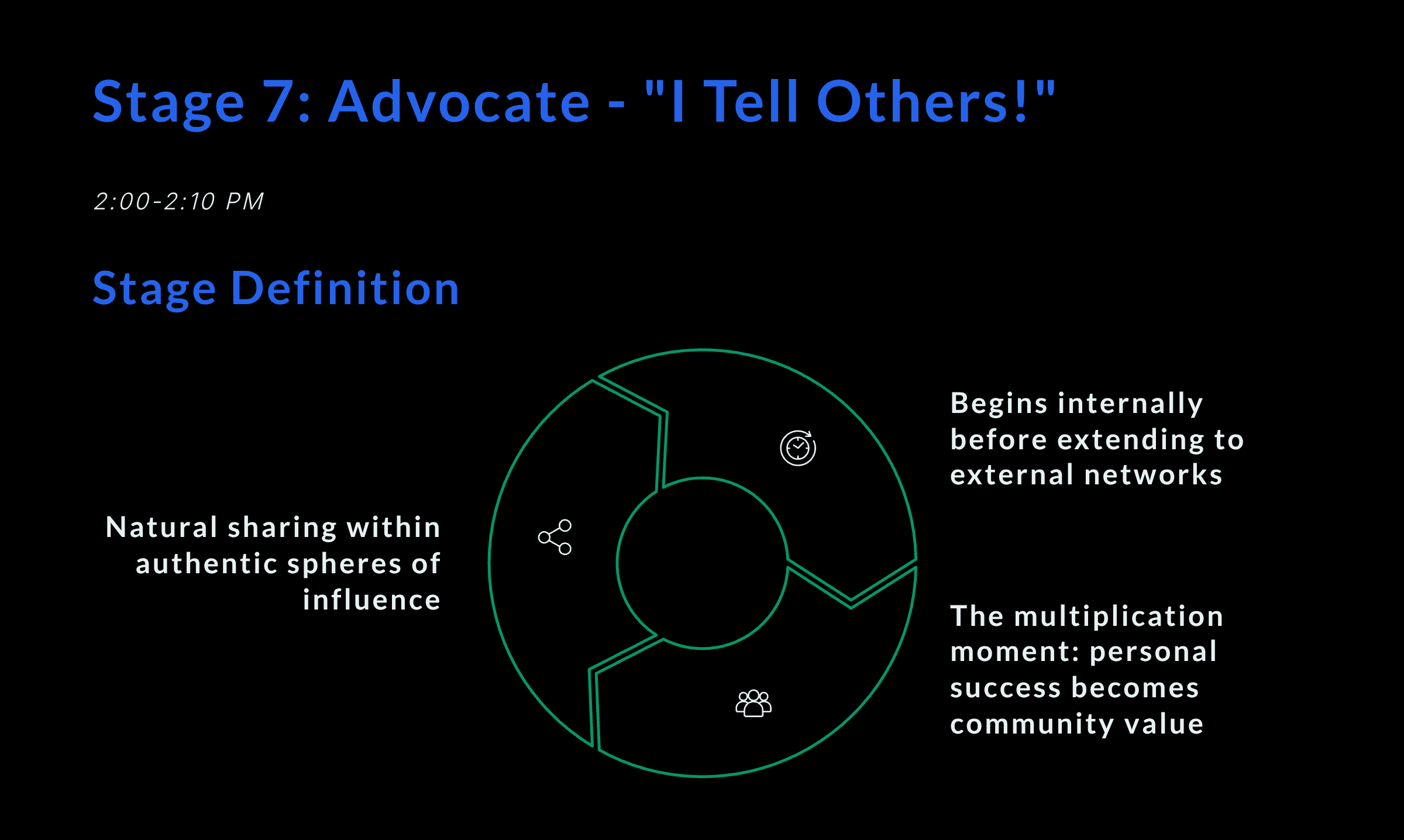
[02:28] **Comparison of Advocates and Champions** Chris Carolan: and and case studies and even like co-webinars, things like that, it's very easy to, you know, oh, do they like us? Uh, like we would they be willing to do something with us, right? It's easy to group those things in the same bucket. But I think it's clear from watching the HubSpot ecosystem and being a part of it, there's lots of people that don't need to be asked to do anything uh, to promote HubSpot on behalf of HubSpot, not nobody in the ecosystem. So we have an immediate example of the difference between these two. Um, but I'm going to share my screen and then um, uh, so advocate versus champion. Uh, and the whole idea, if you remember the value path and Value First Data is are we creating the space in our CRM in our system of record to receive data and understand data as it relates to where people are in their journey. Um, so as you guys see this, this comparison, uh anything anything jumping out at you?
[03:53] **Community Building and Industry Transformation** Casey Hawkins: Um the building of communities versus sharing within their network. I mean, this just resonates with me because um there are tools that I share with my friends. Um but I have friends because of HubSpot and that's like different. Um yeah, that's Klemen Hrovat: To me the the industry transformation is what is the the difference. So one is, you know, someone can mention, yes, we use HubSpot and I tell others about using HubSpot. And then the next level as a champion is you know, sharing best practices. How you use HubSpot, how you think of using it, configuring it, adapting it to different businesses. This is the the next level of of a champion.
[05:06] **Continuity and Raving Fans** Klemen Hrovat: And the other I would say is the continuity. Someone who is an advocate will mention it once in a while. A champion will keep talking about you because it's a raving fan. Chris Carolan: Yeah. Casey Hawkins: Yeah.
[05:26] **Proactive versus Reactive Approach** Chris Carolan: I think there's like a slight difference in terms of like proactive versus reactive here. Um and Casey, you've done a lot of work to start up, you know, the Sprocket here, um weekly now bi-weekly Power Hours. I think that's a good example. Uh I'm not sure if anybody specifically asked you or uh um Marcy, right? I don't know how did that come to pass? But I think that's a good example of what we're talking about here versus like they're just hanging out in Sprocket here and Slack and like answering questions when they come up, helping people understand how to use HubSpot. Uh did you know this is available? Um that's kind of advocacy versus like, all right, let's let's try to take it to another level and get people together.
[06:25] **Evolution of Sprocketier's Power Hour** Casey Hawkins: Yeah, so with that, um Cameron Collins who runs the Sprocketier Slack community, um he made a post earlier this year um, earlier this year saying kind of calling for anyone that wanted to help with anything. He was like, if you have an idea, let me know and we'll like make it happen was generally the message or how I read the message at least. Um, and so I reached out to him after that and I spitballed a couple of like kind of random ideas. Um none of them were quite office hours, but they were office hours, hours similar. I had suggested like even like a daily stand up situation um just for people who are kind of like solo workers like myself. Um and he at that point looped me in with Marcy who I do the um the weekly power hour with. And she had also kind of reached out about having some sort of networking thing and that's all of that to say that's kind of how it evolved into the bi-weekly meeting of meeting of minds. Um, but yeah, it started genuinely as me being like to be honest, Chris, it started because I for years was working by myself and it felt very lonely and then um I remembered though when I worked at an agency, we had a daily stand up where we just kind of went through what we were working on that day, but also chatted and it was nice. Um, and then when I started doing the Morning Show with you, Chris and George, it kind of felt similar where like there are these people that I talked to you every morning and like you know, we talk about updates, but also like I know when they're sick and when they're when there's a uh a two hour school delay. I don't like and just stupid stuff, but like just that like level of connection. Um and I know there's other people in the Hubspot community looking for that, too. So I was trying to find a place.
[08:58] **How Did the Morning Show Start?** Klemen Hrovat: Speaking of the Morning Show, how did that start? Chris Carolan: Um Well, definitely, I think a lot of the the content that I do is a good example of this in terms of it's not just about helping people use the current tool set in HubSpot, it's about like doing things better and trying to overcome like long-standing challenges uh which ended up turning into Value First as well, but like, you know, as a practitioner, um and of watching all the challenges out there, watching Kyle do his best to evangelize and help people understand what's available, but a simple math, Kyle's one person, there's 300 plus days in a year, there's 1,000 updates in a year. Uh and we have a huge gap, knowledge gap. Um so I started doing content uh in March of last year, every day for for Let's Build just with the intent of whatever's on my mind with HubSpot, just getting in there and doing stuff. Um but then in in Q4 of last year, I think is when it was um I said, why not the Daily Show? Like if we're getting hit with updates every day, like five, 10 updates. Uh I mean, it makes it makes for good content. It's helps keep me up to speed on HubSpot. Like, that's like the magic of doing this content. It's like it's the best way to learn. Um and I was doing it by myself and playing with, I actually created a lot of different formats where I was like, okay, it's going to be an object of the day and there's going to be uh, you know, we're going to go over to Reddit and a lot of the things that are happening in various places now, but like I couldn't even get to the extra stuff because it was just updates. There's so much updates, right? And um so that was Q4 of last year and as I started up uh I put Casey on the spot one day uh and she said, yes.
[11:04] **Casey's Involvement in the Morning Show** Casey Hawkins: Well, my favorite part of the story is that Chris said, okay, 8:30 AM Eastern and I said, yep, that's fine. And then he said, okay, every day next week, right? And I said yep. Yep, that's what I thought. Chris Carolan: We're aligned. And then we were at it for about a month and George um got stuck and we talked with George about it and you know, that's that's how that came to pass. Um so I think that's thank you for highlighting that example. but um well I think for you either way, uh and after we kind of talk about these examples, like we'll get into some other details here, especially what companies do wrong when when thinking about this stage. But um uh the data summit that we did um in August of last year right before inbound, I think it's a good example of this. Uh, yeah. What was your share your experience on on getting that, putting that together?
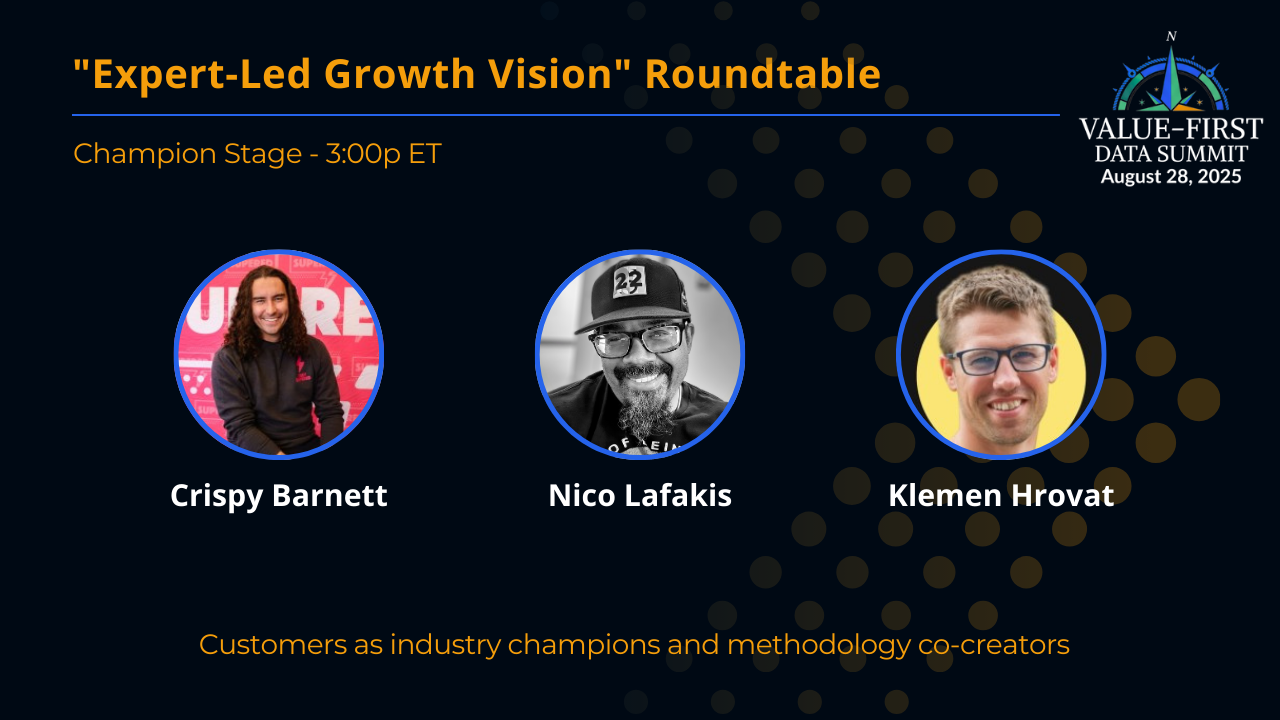
[11:58] **Data Summit Recollections** Klemen Hrovat: It all started with I think your thought after one of our weekly shows, what no, what if we bring experts from the community sharing their point of view around data with with the idea, hey, at inbound things will change. And and data is the foundation for for everything. Um so we better start talking about it sooner than later. Um is there a way we can put together a a big chunk of content where you, I mean, initially with we had a much more involved idea of what the data summit will be and how it will be structured with with workshops and everything, but with inbound coming and and everything, we realized, okay, if only we bring together those 25 experts talking about things related to data. This is a huge value for for anyone getting their mindset ready for for inbound. Um and the the the best part for me was no one said no to just participate and share the knowledge. Um of course, it was a lot of coordination and and and and everything, but people were happy to participate. Um, just know share their point of view and we covered the all eight stages um from different perspectives. Um I had a really good time during the summit, uh learned a lot in eight hours. Um it was a long day. But uh I think we really create know a really good piece of content not necessarily only related to Hubspot, but starting off from experts in the Hubspot community where it all kind of united around Hubspot as a as a as a platform through which you think and and and you know, talk about data directly in Hubspot. Um, so it was really a uh a Hubspot community event, not not labeled as that, but uh it all started from the from the community and how the community around Hubspot is already connected anyway. That's why I think people were, you know, willing to jump in.
[14:45] **Data Summit's Foundation** Chris Carolan: Yeah. And I as I share this, like where the Data Summit, like the seed that got us started talking about it was Klemen had made a post about is every HubSpot portal just dirty? Something like that? Does everybody have bad data? Yes. And there was like 100 comments that said, yep. And that was it. Like no fixes, no like outside of a couple people saying like, come, come like sign me, come pay me money and I'll help you fix it. And that's where like it moved quickly or that's where we took it from like, okay, can't just watch this problem like if if we don't take that, create the event, then it is advocacy is, yeah, you can you can use Hubspot. Here are some ways to use Hubspot to help with this problem. But instead going a different route say like we've got to figure out how to at least talk about this problem like productively so that we don't just have 100 comments that are like, yeah, data's data's bad. Like I guess we just have to deal with it. And I think as we as we brought that as we brought the summer together, um, we didn't have any points programs for the people involved. We didn't have any incentives. Like not only did nobody say no. Nobody asked for for leads lists or like what's in it for me or like any of the usual stuff that when you're not a part of the community. This is where like if you just have your stages of customer and it and evangelist or customer and champion in HubSpot, that means everybody's a customer unless you know, uh, you know, the one in 1,000 like are are starting to champion and you probably don't even track that. But if they're just in a customer bucket, that means you're always going out to them to ask for referrals and testimonials and all these things. And when that doesn't work, you try to manufacture like loyalty programs and all the traditional ways like, oh, well, it's not working because there's nothing in it for them. So how do we how do we motivate them? Right? And what we're seeing on the right is like like the reason that everybody was engaged to do the data summit is it's a major problem that we have to deal with every day. And if we can get any help like from each other uh to help solve this problem and help you know, the community solve the, that's what's in it for us, right? From a large perspective. Obviously, personal branding, all that stuff. But that's the like you can't own that as a company. And if we're not engaged, if we're not motivated to do that thing, we we see this with influencer like marketing all the time, like you see right through. All those posts. We talk all those posts. We talked about that a little bit last week. But does that, you know, resonate Klemen as far as like what we experienced on the way? Klemen Hrovat: Yeah. Um I would say even for each of the round table participants, it was kind of an eye opening discussion. So experts talking to experts around something related to data. I I saw many faces, oh gosh, yes. Uh okay, okay, now I'm at I don't know, I'm at a different level of my mindset. Um Yeah. So just creating a place for for that was I think, you know, valuable for each and everyone.
[19:01] **Contribution without Incentive** Chris Carolan: Yeah. And I think this here, like would they contribute the same way without the incentive? Right. It's another easy question that you learn very quickly, like whether it's survey any kind of outreach where we're incentivizing with gift cards. Like I had a subject line in my inbox today. I will pay you to talk to me. Like And then it was a really, really good. Clearly AI built first paragraph. It was really, really good until it managed to cram in like every single keyword that was in my LinkedIn profile, like a big buzzword paragraph. Casey Hawkins: That's really nice. Chris Carolan: Yeah, sorry. And then it was like, I'll give you a $10 gift card. I was like, no, like you totally missing the mark. And even if I did feel like a gift card that day, I'm not giving you great feedback or answers or, you know, if I were to do a post, like it wouldn't engage anybody. So I and that's where like the earlier stages, you can start to do some of that just to get like, you know, voice of customer going and things like that. But when you're in this, this is where you start to almost offend like champions, like I'm out here every day and you're offering me like a $10 gift card. Like what are we doing? Like.
[20:33] **Recent Examples of Failed Attempts** Chris Carolan: Yeah. Do you guys have any recent examples of uh maybe some some of these things uh not working out so well. For companies that you know? Casey Hawkins: Um I worked with a company who was trying to get a paid ambassador program off the ground. Um and we were having a lot of trouble with it. And at some point I kind of had to have a conversation with the team and I was like, is the product good? Like. And that was even like trying to pay people to like do it. But in the same vein, like, you know, if people aren't excited about what you're doing, they're not going to advocate, they're not going to champion you. Like you have to deliver in order for to get anything, to get anything back.
[21:56] **Linked in Posts by Guru's** Klemen Hrovat: A good example of LinkedIn posts where I I'm not convinced it makes sense, but I guess it does because many companies are doing it are those guru's talking about a tool which you clearly see it's just, you know, a long chunk of marketing verbage of that company with a link to that company's LinkedIn page and nothing more than that. There's I I doubt any of them use that tool they're advocating for. But I'm sure they're paid for it. Um and and you see that from the post. Um which means, okay, someone was paid to say something. Uh But I'm not sure this is the way how you want to, you know, bring your brand to to the world outside. If the only way how you can amplify your reach is through paid post, not advertised, paid, but you know, paid posts through guru's. If you don't have other raving fans, I mean, is is that tool really that good as as they're saying? Yeah.
[23:23] **Amplifying Messages is About More Than Audiences** Chris Carolan: Yeah. And I think um when we're going to talk about loop marketing in in a few minutes, um how this relates, but like the whole amplify stage, right? It's supposed to be about finding you know, whether you call it key opinion leaders or influencers or people with audiences that are that really need to be aligned. But that's not made crystal clear uh in the instructions. Just go find other people with audiences that can spread the word, right? And um in a lot of spaces it's well known like how fragile that is, even to like the detriment, like if you don't do that the right way with the larger audiences. Um it can definitely come back to bite you. Um and what's interesting as I uh share these signal categories like up to now and I'd say if we're giving people the benefit of the doubt, uh why they run to like paid activities, like most of the times because they're measurable, they can try to prove ROI, right? Um and this kind of stuff that we're talking about was not so easy to track, not measurable and what we're seeing with the value path is that you can build Hubspot now in a way that helps you track this activity, that enables the activity, right? We've shown many examples of signals already coming in to HubSpot, buyer intent, like people publishing articles, speaking at events, right? It's a category Hubspot's already giving you this data. If you tell them who to track, Hubspot can already give you this data. So real quick, content creation, community leadership, industry recognition, methodology contribution, kind of what we're doing here. Uh uh in addition to like you know, George doing a series on uh the loop marketing, you know, playbook as a whole, he's in the middle of like an eight or nine episode series of his um podcast. Right? Peer mentorship, a lot of that happening withinly and Sprocketier and just the Hubspot community in general. Uh and thought leadership. Um and this is where like why this is Value First Data, we're talking about this. Can your CRM track when somebody transitions from oh, they they gave you a testimonial to, oh, they're doing shows about Hubspot. and I can tell you, when I'm trying to give benefit for the doubt of the systems have not been in place and even though Hubspot can do it, the big companies like Hubspot have not implemented this stuff yet because it drives me crazy when I meet somebody new at Hubspot. And I have to explain what I do to them. Like like do they not have a CRM contact record that says Chris Carolin? And like could show like even 5% of the stuff that I do and it becomes very clear the more that I've worked with Hubspot over the last 10 years, if they're on a different team, they have different records that they're looking at and it's just warded gardens everywhere, permissions everywhere. The product team can't see what sales sees. And it's um I I guess I'm I got for punishment there because it hasn't driven me away. Imagine when it comes to like ROI calculations of how how much the community is actually worth, right? How much the academy is actually worth. We're trying to help um you know, talk that lots of conversations with Gabby from the community team about this like she knows that they've got to figure out a way to activate uh the community outside of the walls of Hubspot owned properties. And now she's having a lot of fun with signal recognition, right? With AI being able to see across the landscape, the entire digital landscape, who is talking about it, who is doing stuff like this. And so I'm not surprised to see Klemen show up as a as a champion of the month. And I expect we'll see, you know, more of that uh, you know, moving forward going way beyond the the points structures involved, right?
[28:59] **The Program and Natural Paths** Casey Hawkins: Yeah, because so if you're watching this and you don't know, the community champions program has a point structure. Um, and you get points for doing things. I've never been good at. That's kind of a lie. When I first joined the program, I was like very regimented about my points. I didn't want to leave the program. I was like, I have to maintain my points. Um, but then once I started kind of finding my footing in my own in my own voice and my own like platform, which feels weird to say I don't have my platform. once I started finding my footing, I feel like um I focused less on Hubspot's like point structure because I was doing stuff outside of that. But still like creating Hubspot content, still being a champion for Hubspot, it just wasn't always fitting into like their point box. Um and every time I was doing something to fit into their point box, it was it I mean to the whole advocate thing, it felt less authentic. Like it would be like, make a video about this feature. And then I was just like making these videos about features that like I wasn't, I didn't care about, like, I don't know. One time was like, share this video and it was like all Hubspot employees talking about something. And I was like, I was like, I'll do it. seems easy. But like weird.
[30:30] **What Feels Right for a Community** Klemen Hrovat: I totally feel you. That's you know, when I joined the the the advocacy community was when I started thinking of applying for being a a correspondent. And I realized, okay, I need to join the the advocacy group. Uh and there are some points you need to earn. So at the beginning guys, you know, started taking the boxes to get enough points so I could apply to be a correspondent. But immediately after that, I felt, okay, chasing those points is not how I want to contribute to the community. I just stopped doing that at all. Um I I engage in the in the community portal when someone tags me and I I feel I have something to say, but I don't monitor that community there. Uh I I rather dedicate my energy to LinkedIn because this is where I anyway am present. Casey Hawkins: Yeah. And to be clear, there's some really active and really great people in that are active in the community forums. Um, Christopher um is very smart, very active. Um, very quick to respond. I remember when I started trying to participate in the community, I was like, I can't get any, I can't answer anything. He's just just There's always I can't get to the whole fast enough. Um but that's where like their space like that's when it was like, okay, this doesn't feel like my space. that so I found a different space. Chris Carolan: Yeah. Klemen Hrovat: To me what's felt sorry, Chris, I'll let you go just my thought. To me what what felt not the place where I really want to engage was this is a space where more technical questions are asked. You know, something is broken. I don't know what to do. Is that, you know, feature still available? Those are the types of questions I was finding in the community portal where I didn't feel I belong there as you know, I don't have a a 10 years history working with Hubspot as I I was never part of an agency, a solution partner. So I I didn't feel I'm I'm the one who should be answering those questions. Where on LinkedIn, I I can talk about different things still related to to Hubspot, how you should, you know, use Hubspot in in a better way and how to better use it where that content fits more to the to the LinkedIn community than that, you know, community portal with questions and answers.
[32:55] **The Champions Way** Casey Hawkins: But I think that's what makes us like champions in the way you're defining it, Chris, is because when the like the box that we all reached at some point didn't fit, then we were like, we didn't even we didn't give up. We didn't say like, never mind, I'm just not. I'm just not going to talk about Hubspot because I don't really like this. We kept talking about it. We just did it in a way that felt more authentic to us. Chris Carolan: Yeah. And as you as you might imagine, I never reached that box. Um I, you know, this is the kind of stuff where it's just like I if it's performative in any way, like I'm just don't want to do it. And but luckily, this is an example of how the systems we have like kind of trapped good humans to to keep doing things a certain way. Like I remember, I don't think Gabby was the first person I talked to from the team, but uh in 2024, um so long ago. Uh I I ran into this and it was like, maybe coming from a place of, let me see if I can, you know, I'd already been doing content. Let me see if I could get involved in the community space. But it was just, you know, like I would have to manufacture this activity, right? And um whoever was on the other side, we'll just pretend it was Gabby. She's had a lot of conversations like cuz it was kind of like, you know, I don't have points, but if you can like see everything I'm doing over here, you know that I'm kind of invested in Hubspot and the community and I'm adding a lot of value. So hopefully, I don't have to come over and fit it in this little box over here because that's going to reduce the actual value that I'm able to create. And she's like, oh yeah, yeah, we get it. We're working on programs to like expand and um but that was an example of like, this is the way it used to be done, right? It's it's now we're transitioning and now the AI is here in full effect, it's getting easier and easier. You just have to make the decision to not have to own everything to try and take these new strategies. And honestly like you're going to have a hard time finding this in the loop marketing resources. But that's for us as as champions, are here to help explain the framework. Um because that's exactly what loop is trying to help you do, right? Um I I the different lens I put on it is again always thinking from the um the customer's perspective, right? And that we've talked about the loop existing at each stage of the value path, right? As it's really like a rev Ops. It's a rev Op systems framework is what the loop loop really is. Um so if we have express, you know, will this help them get clearer on, you know, the way that we talk about Hubspot? Like a classic conversation is the Hubspot admin versus Hubspot consultant versus Hubspot like all the different ways like those are active conversations. Um like do we have the language we need, you know, to share and uh but a champion, like we're kind of we start creating our own language, right? And try to because we're closer to the market, we hear what resonates, what what doesn't. Um and we try to shape shape the conversations, right? Taylor customizing approaches like we hear this a lot, like manufacturing versus SAS versus Fintech versus healthcare. Like every single one of those domains has different ways of talking about the same things. It's it's Hubspot needs a group of champions because Hubspot cannot have all of that language built into their, you know, localized domain. Um amplify, right? Their our own platforms and communities. We already talked about that a little bit. Um and this example of like, yet we still get to be a correspondent even though we didn't get the points because we were adding value in the places that where we hang out, right? Um and then evolving, like we can like the correspondence program like we've we got uh in all when I talk about Hubspot, the things they do, they're enabling the things that we choose to do like with our time. Like when we get to record live at inbound in the media that wasn't available last year. But they are able to see data um that says, maybe that's a good idea. Maybe we should let these people who are loud and proud about Hubspot give them more space, right? And then right after, of course, there was an ask for data about how how it went, right? So that we could learn and it exceeded expectations and you know, we expect it to increase next year when it's back in Boston. But this is, you know, um hopefully this is this is helpful because the frameworks are here. It's really just a decision. That's what this whole series is about, like you can track this stuff now, right? It's never been easier once you un once you make the decision like to track it. Um And if you need help, like to get to like how do I even decide I want to track that? Unified customer views. If you can define that for your organization and that is going to require sitting people down who are going to be like, I'm I'm looking at a Hubspot contact record right now. Is everything I know to be true about this person and starting to get outside the lines of deals and just sales CRM stuff. If they say things like, oh yeah, I saw them post about this thing on LinkedIn a couple days ago and I commented and there was a really good exchange back. If that's not in the CRM, it could be now very easily actually. Social tools in Hubspot. Make that very easy to bring into the CRM. That's I think how we're we're getting to the decision of yeah, let's let's track all this stuff.
[42:32] **Use of AI** Klemen Hrovat: And that's only now I think possible with AI being able to to listen and understand what whatever and wherever people talk about you. So they can, you know, you can now use everything that you can listen to and then structure it in a way that it's an useful to to score to you know, to progress contacts through that value path directly in in Hubspot.
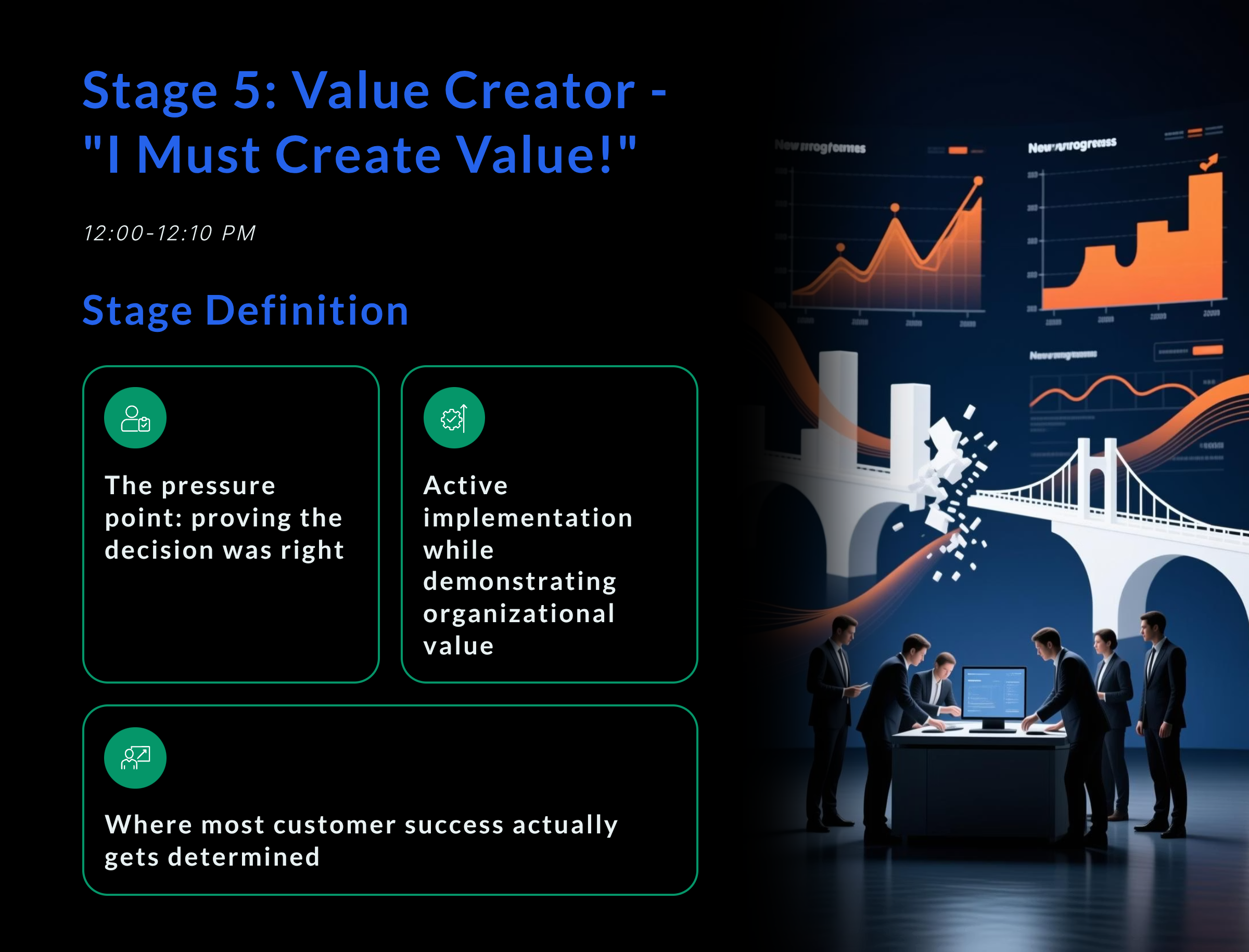
[42:56] **Fun Series and Practical Application** Chris Carolan: It's been a fun series uh folks. Um this is where we've been, audience researcher, handraiser, buyer, value creator, adopter, advocate and now champion. Uh, we're going to do something fun, at least for us again like you know, at worst case like we're learning, we're having fun. Um but we are getting good feedback about how much this this framework is resonating with people. So we'd love to have you join us uh next week on December 17th uh a group of Value First uh you know, practitioners are getting together to show some stuff actually built out in Hubspot uh is the goal. It might take us one or two or three three tries to to get in there and just like we're even us, we're in Hubspot all the time. Like we're seeing new stuff like every day that like Hubspot is trying very hard to allow for these kinds of experiences inside of Hubspot. Um so next Wednesday uh December 17th at 2:00 p.m. Central uh we're going to be getting together to get inside of Hubspot and see see what this looks like. Uh, any any uh final thoughts as we wrap up this this part of Value First Data?
[43:59] **Reflecting on the Path** Casey Hawkins: Um it's been nice. It's been good learning through this. I was just talking to a client about the paths today and how they fit in. Um I think it's transformative in a way that um is going to take some people some time, but my favorite thing about it is and you say this all the time, Chris, when you talk about it, it's like a natural path of human paths. Like we're not putting people, putting these random words on people that we, we being Revops, marketing, sales, whoever made up. Klemen Hrovat: To me the aha moment I think happened at, you know, sixth or seventh or you know, one of those episodes. When it was, you know, for four or five weeks straight, we were talking about data and in and in value path and, you know, after let's say five hours of talking about it, it was, okay, things are coming together. Uh I mean, I I I knew it it it it's good from the beginning, but you know, after several episodes to me it was really eye opening that, okay, that's something I can internalize and every time I talk with that mindset to to clients or or internally, it was, okay, we can we can build on that. It's clear in in five, 10 minutes with when you approach that. Um and it and and this is I think how we can really help the community go beyond life cycle stages which in every portal we're at. It's not what they need in terms of measurements. They're just, you know, it's a bad proxy for what they want to measure and what they need. And this is I think the the framework, the approach of of how you do stuff to get to the right data so you can have informed discussions and decisions of how you can evolve as a business on top of the data you can gather.
[46:24] **Closing Remarks** Chris Carolan: Indeed. So uh that's roll wrap uh for next week. Uh again, check us out the workshop December 17th, 2:00 p.m. Central. Uh we'll be streaming live from LinkedIn and maybe some other places, too. Just stay tuned. Um well, thank you to Klemen and Casey so much. This has been a fun series and uh this won't be the end of Value First Data, but uh we're going to get practical moving forward. Try to get into the how um so that we can help people you know, do some more some more Value First data.
More content you might be interested in.
{% video_player "embed_player" overrideable=False, type='hsvideo2', hide_playlist=True, viral_sharing=False, embed_button=False, autoplay=False, hidden_controls=False, loop=False, muted=False, full_width=False, width='1920', height='1080', player_id='195285194558', style='' %} Summit Context: Settin
{% video_player "embed_player" overrideable=False, type='hsvideo2', hide_playlist=True, viral_sharing=False, embed_button=False, autoplay=False, hidden_controls=False, loop=False, muted=False, full_width=False, width='1920', height='1080', player_id='196854374831', style='' %} Opening Hook At the Va
{% video_player "embed_player" overrideable=False, type='hsvideo2', hide_playlist=True, viral_sharing=False, embed_button=False, autoplay=False, hidden_controls=False, loop=False, muted=False, full_width=False, width='1920', height='1080', player_id='196851345200', style='' %} At the Value-First Dat
Subscribe to Value-First Data and never miss an episode.
Courses, playbooks, interactive tools, and data model examples. Everything you need to transform your CRM.
Your donation helps us provide free resources and office hours to the community