Value-First Data
Unified Revenue View Part 4: Scope Decision
Watch Episode →

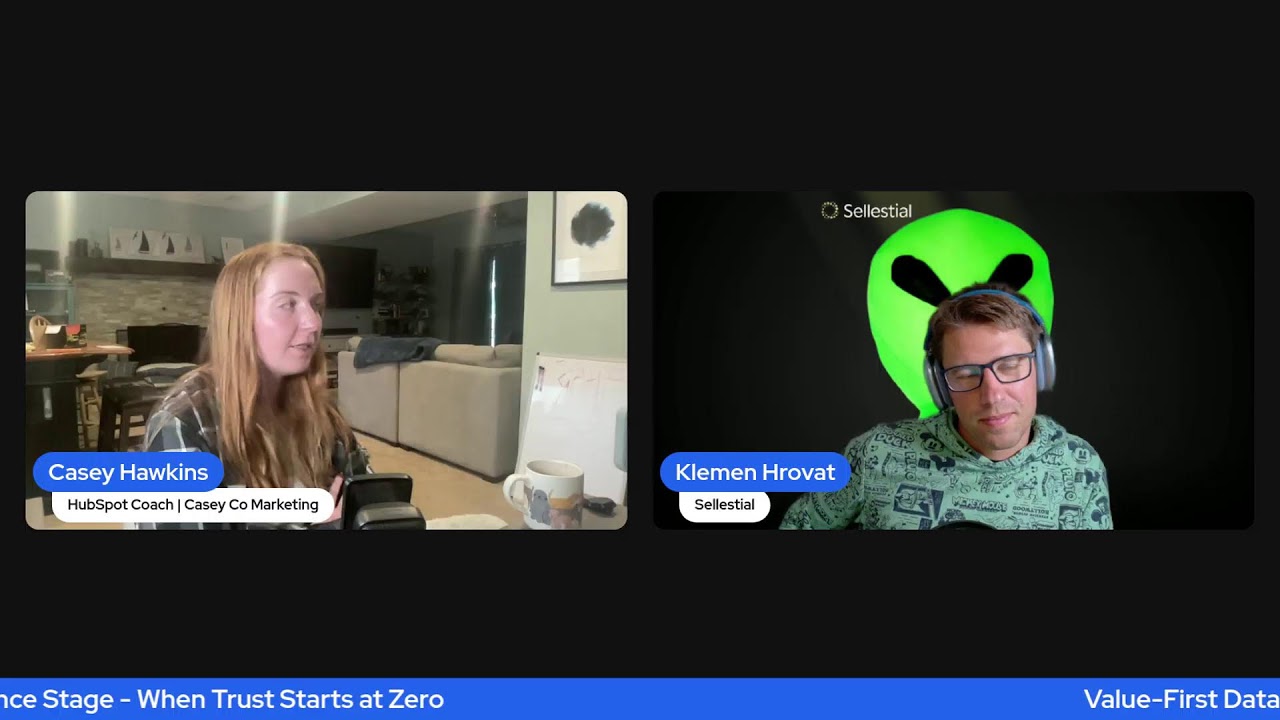
Generated via AI Transcription (Gemini)• 90% confidence
[00:04] **Introduction** Casey Hawkins: Good morning, good afternoon, good evening LinkedIn. Thank you for joining us today in what is Episode two in the Value First Data series. Um, Chris is off doing Chris things today. So it is me and Klemen and I am in a weird, I think host position here because uh, I don't I don't feel like I should be the host, but I just happen to have the host controls on stream yard. [00:40] Casey Hawkins: I showed up thinking that I was just going to chit chat with my friend Klemen. Um, but we have business to attend to today. Uh, Klemen do you want to give people a little bit of an overview of what Value First data is? And then I can jump off on like last week and what I gathered from last week. [01:07] Klemen Hrovat: Yeah, yeah, yeah, definitely. Uh, Casey good to have you here. Uh, I'm sure we won't miss Chris. Uh, no offense Chris. [01:19] Casey Hawkins: All offense, fully offense. [01:22] Klemen Hrovat: Um, I mean yeah the whole series started last week more or less. So it was really just uh, you know, a high, high level deep dive, uh, for for a better of worse, a combination of worst of words. Um, the whole idea is really to just go through how, you know, that data flow is changing, uh, or is supporting all, you know, kind of eight stages of of the value path. [02:09] Klemen Hrovat: Um, and how you should think at different stages about different data, different use of data. How loop marketing is is kind of, you know, its own loop in every stage. Uh, we kind of touched on that. Uh, went through ideas. Uh, I think laid a really good ground for for what's coming. Um, as we discussed before we went uh, live, we might go in the other direction as it was maybe planned. Uh, but I think it's uh, you know, for for a good reason uh, wherever we go. [02:58] Klemen Hrovat: Um, really the the main goal of everything is talk about data from all different aspects. Um, and I'm I'm actually excited to to have you bring your own perspective around all the scoring and everything, which is, you know, a big part of Value First data, how to think differently about data. Um, and yeah, uh, audience stage, um, before we go deep dive, uh, here's you hear your thoughts after reviewing last week's discussion. [03:41] Casey Hawkins: Yes. Um, so my took notes, um, and just jump in, let me know where I got it right, where I misunderstood. Um, but you were really covering the Value First value pass, um, which if this is your first time hearing about these, um, if you go to value first.site/framework, and then if you control F audience like I did, then you will find the uh, eight stages of the value path. [04:32] Casey Hawkins: Um, it starts with audience, that's what we're going to be discussing today. Um, researcher, which is people who are researching. Uh, hand raisers are the people ready to buy. Um, and then hero I'm building conviction. Um, but then it goes further than that. Uh, we go into value creator, creating value for the organization, adopter seeing the value, advocate telling others about you, and then champion is the raving fans. [05:03] Casey Hawkins: Um, and why this is really interesting when it comes to lead scoring is this is not how lead scoring is traditionally set up. Um, but as you mentioned, you talked a little bit last or a lot last week about um HubSpot's new loop marketing, which has express, tailor, amplify, and then evolve. Um, but it doesn't match traditional lifecycle stages, it doesn't match the flywheel. Um, so instead what you and Chris were discussing is how loop marketing actually fits into all of these stages and how you actually have to you have to loop within each stage basically, which does make sense when you think about it. [06:06] Casey Hawkins: So if loop marketing, express, know who you are, tailor your message to your audience, amplify that message and then make changes as needed. I mean, that looks different for someone who like we're talking about today might just be like browsing the internet and run into you, then it's going to look like for someone who's in an active buying cycle. Um, that expression is going to look different. Um, but also the way you amplify is going to look different as well. [06:50] Klemen Hrovat: Yeah. Um, I definitely agree with how you summarize it. Um, I would say, you know, it's really loop or loops within loop. And and you know. [07:12] Casey Hawkins: Loop-ty-loop. [07:12] Klemen Hrovat: All over yeah, loop-ty-loop, yeah. Um, the the the main kind of uh, way of thinking is it's really can be loop at any stage because you can, you know, express, you can amplify, you can you can tailor messaging for different buying stages, uh, customer journey stages, uh, value path stages, all of all of those. [07:58] Klemen Hrovat: Um, and and and the the goal of of what you are saying and how you're saying and also the data supporting that is is totally different. Um, and you know, someone in the audience stage is really I'm just looking around. Uh, so the signals if you will for for that or how you, you know, score or how you serve them is totally different even from the from the data perspective. Um, how you identify who is where, uh, part of it, the answer is in data, uh, that you can kind of collect and and measure, part of it is just maybe you just don't know. [08:58] Klemen Hrovat: And just think how to how to serve the loop in each of those stages so they can, you know, feel it and they can express uh their own next step or or where they are or they can find their own path forward from from where they currently are. [09:20] Casey Hawkins: Yeah. So I know the plan is to cover all eight stages. Um, and Chris did let me know that if I did well today, then I might have a spot in the future sessions, which was very uh, very kind of him. [09:40] Klemen Hrovat: Who's the who's the judge? Do we open the the poll after the event or is it just who's the gatekeeper? [09:57] Casey Hawkins: So we'll see if I do a good enough job today. We'll just we'll have to find out yet. We can. [10:01] Klemen Hrovat: I I'm happy I say it right now. I'm happy to have you even next next week. Don't worry. I'll convince Chris so you can join. [10:12] Casey Hawkins: Yeah, in the comments you just drop and say that um, yes Casey or something. I don't know. Uh, Jill Chris, help help help us uh tell Chris uh please should be here next week. [10:31] Casey Hawkins: But for today until I pass this test, I'm just here to talk about the audience stage. Um, and when we talk about this audience stage, this is representing people in their earliest moments with your brand. Um, these are often going to be people who Googled a question on the internet, ran in to a piece of content from you and then may have moved on with their lives. [11:10] Casey Hawkins: Um, personally, I do HubSpot consulting. I have a couple of resources on my website, a couple of blog posts. I don't have a big website. I'm, I am but a single person. Um, but for example, I have one on marketing contacts and how to best manage your marketing contacts. Um, there's a world where someone is just looking up what to do about their HubSpot marketing contacts, how to manage that. They wind up on my website. [11:50] Casey Hawkins: Maybe they read the full blog post. Uh, maybe they even download the PDF that I have, um, that has like the step by step instructions. Maybe all of that happens. Um, and then they leave and then then what? And the reason I think I got brought in today is because traditional lead scoring would say amazing. That person came to your website. They read your entire blog and they downloaded that resource. Get them on the phone. start calling them, start LinkedIn messaging. But that's it's a little it's a little much. [12:55] Casey Hawkins: Um, because from like the user perspective from me, I have downloaded resources from the internet before and I have gotten calls. Never once have I been like, oh yeah, that white paper I downloaded. I couldn't wait to talk to your sales team after that. Um, so it just puts a bad taste in your mouth, really, when we treat this audience, these people who are just merely consuming content as and they're not even in the research stage yet. [13:44] Casey Hawkins: They're just like randomly added got added to our blog for whatever reason and then we treat them as if they're like sales ready. Um, it causes so much friction with the individuals that were on our blog because then suddenly they're like, I don't ever want to talk to you because I got overwhelmed immediately. But also, I come from marketing, it causes a lot of friction with marketing and sales because marketing sending these like good leads, sales, marketing qualified leads over, but sales is not getting anywhere with them. And there's, I mean there's zero, there's no trust anywhere. [14:38] Klemen Hrovat: Yeah. Um, around the the audience stage, I also like to to think about, you know, LinkedIn in in in in in in general, you know, the feed. You you keep seeing someone's post or someone's engagements over and over again. Um, it happened to me several times at at inbound. Um, people stopped me wearing the alien. and say, hey, you know, I've been I've been seeing you for the past three days with with your alien on LinkedIn. Mhm. Um, I have no idea what you do, but, you know, kudos for for what you're doing. [15:25] Klemen Hrovat: So this is kind of, you know, the the audience out there. They might like the the the post after that, but it doesn't mean they're, you know, anywhere close to for me pitching them a demo of of of celestial or the system or or anything. They're just there, uh, and they might see your content, they might even download one of your, yeah, um, PDFs or or or lead magnets or or what not. Um, but it's it doesn't mean they're really saying, hey, you know, I'm I'm even a researcher. [16:09] Klemen Hrovat: They might just find you somewhere. Um, and it also doesn't mean that you should be, you know, emailing them every month with something new. They will rather unsubscribe if you try to push too much your content, um, to kind of nurture them. Um, and especially with every, every inbox being so overwhelmed with with everything, you really don't have time to, you know, to to read through through everything even if you downloaded something. I know I know how many times I download something or I, you know, re comment whatever banana. [17:06] Klemen Hrovat: Uh, and I'll send him my, you know, uh, whatever playbook. Um, I don't think I ever even get to that resource. Mhm. What what not that that means I'm buying your service. Um, I'm just in the audience. Uh, part of it why I comment in those posts is because I I'm curious what happens. Uh, to just, you know, see how others are doing things. Um, but it's really, you know, I'm I'm just part of the audience and and I don't want to be called out from from a SDR to to, hey, what what when is the a good time to to to to book a demo? [17:56] Klemen Hrovat: Um, and then to your point of lead scoring, um, keep that in mind, people are just, you know, in the audience. They might never buy from you. Mhm. But they might still consume some of your content. Uh, so treat the automation wisely. Um, even though the tool allows you to automate things, uh, and and and keep automating things, um, it doesn't mean that you should automate everything and just, you know, keep reaching out to each and everyone through four different workflows because hey, why not? They they visited your uh, homepage and then they went to a blog post, now four different workflows triggered some action, some communication and then they're kind of, you know, swamped with all the communication. [18:56] Klemen Hrovat: Um, this is where, you know, the data and then the signals might trigger wrong action. [19:07] Casey Hawkins: Yeah, I think it does oftentimes because I think a lot of times people in this stage they might be like you said bookmarking something to open later or whatever, like why why ever they were downloading or interacting with your content. Um, but what they want to feel like is that they can explore your content without having consequences. So they're not going to be bombarded by your content. Um, and they have just like a gentle curiosity. Um, but the more barriers we put in front of people who are in this stage, the harder it is to move them into other stages because if they're a little skeptical right now about you because they don't know you, if suddenly you're gating a ton of content or sending them up a bunch of messages, calling them. [20:39] Casey Hawkins: Um, that's going to that's going to cause more harm than good in this stage. [20:45] Klemen Hrovat: Yeah. Um, I would say, you know, kind of the the data you want to to capture, um, if if you will, is is not necessarily their phone number so you can call them out tomorrow. Uh, but rather maybe, I mean, okay, yeah, email so that, you know, you can recognize them or their LinkedIn profile, so you can kind of understand their profile if nothing else, if you're tracking who is on your website, understand who is the audience on your website, who you're attracting, so you can tailor the messaging to those personas, not necessarily to pitch them right away. Uh, it's really a broad audience, 80% of those will never buy, 10% might might buy in the next three years. [21:50] Klemen Hrovat: And then, you know, a small fraction of of of everyone might be ready to move forward to to researcher or hand raiser and and and further. Um, so in but when when I talk to organizations about this, um, what I what I often hear and just putting it into the lead scoring framework, um, for my own um, for my own reasons is people want to lead score these people because one, what are they going to send their sales team if they're not including these blog visits, these like uh top of funnel really, uh, interactions. [22:54] Casey Hawkins: That's concern number one. And then concern number two tends to be what the one in a million. Like you said, there are a few people that are going to be ready to move to researcher or hand raiser and I hear organizations that are so scared of losing that person that they treat everyone as if they're a hand raiser because one of them might be. [23:27] Klemen Hrovat: Yeah. You know what I mean, that that's kind of to measure everything and, you know, everyone who is downloading is is measured as conversion. Hey, we're doing something right, we have the right content. So let's see how many of those that converted that PDF will convert it further to MQL and SQL and then book demo and and and and what not. Uh, and because of kind of that urgency we want to create and the the KPIs, we don't allow people to just be in the audience stage. [24:05] Klemen Hrovat: We we you know, we we try to to force them tell me are you a hand raiser or not? Otherwise, you know, I I I don't care uh type of of of the approach. Um, where I I would say, you know, more and more now you'll really want to build the trust into the the company into the people behind it. Um, and when you will be in a position to be in the in the researcher or kind of, you know, hand raiser stage where you are in the buying mode, those will be the brands and names you will go to check for for the solution because you're already familiar because you were in their audience for a while and you recognized them as, hey, these are the experts for for X Y and Z. [25:12] Klemen Hrovat: Um, and when when I decide to go further, it will be when I feel okay, my my pain is now so so acute that I want to be a hand raiser. Uh, and I I want to move forward, not because you are trying to convert me into a demo, uh, just because this is how you automated the the the communication. Um, and I I keep getting phone calls from SDRs from a company where I had a demo like eight years ago. They keep calling me. I I I I started two different businesses in the meantime. [26:10] Klemen Hrovat: They keep calling me. I'm if I want to have a demo because they have X Y and Z feature ready which might solve something. Um, I have really zero intention and I always tell them uh that they should not call me and in a few months they call me again. Um, and if I ever need something I will figure out if they are part of what I want to to to learn. Um, but not because they're calling me. I won't go to to the other stage. [26:56] Casey Hawkins: I think part of the problem in my opinion is that we don't trust people to know if they are actually in the hand raising stage. Um, or even the research stage. We don't trust people to show us that. And I think the reason we don't trust people to show us that is because we're not very good at like making that easy and making that clear. Um, I think a lot of times people will say, oh, well we want to follow up with um our resource downloads because they might not know who we are. [27:56] Casey Hawkins: Well, why don't we just make it perfectly clear who we are? Like why aren't we doing that? Yeah. And I think that's where like that's where the loop marketing does come in because first the first step of loop marketing is express. [28:19] Klemen Hrovat: Express. Yeah, express. [28:22] Casey Hawkins: What you do. So if you are good at expressing what you do, there shouldn't be a concern about whether or not anyone who downloads your resource is going to know to raise their hand when that time comes. [28:53] Klemen Hrovat: Yeah. Um, and part of that I I think is the, you know, uh, I would say a good approach of of of what HubSpot did whatever months ago when they said, you know, our our blog post visits dropped for for 80% and and and and and in that, you know, shocking numbers, have the content which express what you do and what the value of of your system is, not just random content. Um, because then people can understand what you are. And and and by expressing what you do in the right way and and keep saying that, people in your audience will naturally understand who you are. [30:07] Klemen Hrovat: Um, and going to the to the data part of the discussion, I would say this is the stage where you really shouldn't try to measure KPIs and and and data and and you know, metrics are are not important at the audience stage. It it's more what kind of, you know, loop marketing is saying, just you know, express, express, tailor, amplify, care about those, not what KPIs do you how many people from downloading a PDF to to to MQL or to demo booked you you have, but rather are we communicating to that audience the right messages, the right problems? [30:57] Klemen Hrovat: Are are they understanding what we are helping them solve when they need it? Um, are are we building the report when they need an expert that they think of us. And it's really hard to measure the success of that. Uh, I think it's more of what you should think and measure is is more of is it consistent messaging? Is it consistently telling, expressing what we are, who we are. Uh, rather than, you know, how many people downloaded a PDF of or particular PDF. [31:41] Casey Hawkins: I think for me the data piece of this is more about how do we get this this phase out of the rest of our marketing. And knowing knowing who this audience, who the audience is versus the researchers. Um, because too often we're treating all of these three as one. And I think that does us a disservice because it can come off as overwhelming or creepy. Um, yeah. So from my perspective, it's like and how this comes into data for me is how to exclude this. [32:53] Casey Hawkins: And I try to do this with lead scoring by only scoring contacts who have downloaded um at least two resources or have visited our blog multiple times, not the first time they ever visit our blog. Um, I'll also do this sometimes by looking at what they downloaded and how that applies to me. Um, so if you downloaded my guide on non-marketing contacts, that might not be um, while that is something I can do for you, you are probably pretty self-sufficient and if that's the only thing you downloaded, you might not need me um, to help. [33:43] Casey Hawkins: But if you downloaded a more complicated resource or maybe you downloaded um something with a little more like sales intent, like a demo or something, um, that might show me you're a little bit more in the researcher phase at least. [33:58] Klemen Hrovat: Yeah. Um, is it definitely even how many times they visit your website, what part of the website. Mhm. Um, and and and here I would uh, I mean, I I think that in in a way, you know, pricing can be kind of the the buying signal, uh, but not necessarily. Um, if nothing else, you know, I I go to the to the pricing probably in in the let's say, when I'm in the researcher stage, not when I'm in in the hand raiser, but it doesn't mean that I have any buying intent. [34:40] Klemen Hrovat: It might be just, okay, I I I heard about a tool, I'm curious the ballpark figure. Is it free tier? Is it, you know, 20 bucks a month? Is it 5,000 bucks? Um, just that I know where to put it in my head for whenever later I might need it. Uh, so just me visiting the the pricing page, it doesn't mean that, you know, I'm I'm the hand raiser. Um, where if if I, you know, if I see someone reading our data privacy policy, Mhm. Yes, this is a different signal. what the reasons. [35:17] Klemen Hrovat: Even even if this is not the first page. Um, so and and and but blog post, probably every blog post is is is, you know, just an audience searching for something or they found out about you or saw, you know, your blog post mentioned somewhere and they just checked it out. Um, also like what is that blog post's topic is going to matter. Um, I had a client um, who did social media had a social media scheduling app, um, similar to a Hoot suite or something like that. Um, and their most trafficked trafficked blog page was like the 20 sexiest Instagram handles or something. But that page never converted. I don't even think I could find a person who ever visited that page that ended up converting. [36:28] Casey Hawkins: Um, so for if we just like followed up with everyone that visited that page or, you know, downloaded a resource off that page, we would it's just a misalignment. Um, which is where I think loop kind of comes in. So you we talked a bit about expressing and I think this is where expressing is important with your audience, especially if we're talking blogs and things like that. The audience when they're learning is a great time to be expressing yourself, to be sharing who you are, what you do, and what you do best. Um, I make a lot of content about lead scoring. [37:14] Casey Hawkins: There are a lot of people who are just in this audience phase that consume my lead scoring content and that is totally fine. Um, but I if I treated all of those people as if um they were hand raisers. Um, it would just be a misalignment. So you start by expressing yourself in this audience phase, um, with the type of content that you create. [37:54] Klemen Hrovat: Yeah. Um, an interesting, you know, building this point you you included in the in the post to invite people to show us, you know, what AI should be learning at this stage. Uh, and then you know what kind of data related to to to to to to think about and then what to measure. Um, I think that goes to uh, someone to to what you were just saying now. Mhm. In in a way it's about understanding the audience, who who they are. [38:38] Klemen Hrovat: So you can think, okay, with that type of content, I'm attracting that audience. Then understand why um, why that might be relevant. So you can further tailor the content pieces, the the how you express yourself. You you might need, you know, to change some words because you're attracting, I don't know, low-level people, but if you want to to to to get, you know, C-level executives coming to your website, that might be a signal for you that, hey, not the right people are coming to to my website if that's the goal. Um, so these are kind of the the the data signals I I think you should be thinking about uh, at at the audience stage. [39:25] Klemen Hrovat: So who am I attracting with what I'm expressing I am, that we are doing as as a company, as a service. Um, so then you can, you know, tailor that messaging to to steer what audience you're attracting to to your content, to to what you say. [39:48] Casey Hawkins: So I did a couple of blog posts that went on the HubSpot Community blog about lead scoring, um, at the end in August around the sunset of the legacy scoring tool. Um, I also did content that was gated. Um, and that's I think what to me what tailoring in this step looks like is I know who I am. I'm, I am I am lead scoring. Um, but then I tailor it in a way that makes sense for people who are just learning. [40:40] Casey Hawkins: Here's a blog post. It's easy to consume. It's easy for me to produce too, which does matter. Um, and there it's presented in a way um, that is on demand at their fingertips, um, and they can find us they're casually looking without any strings attached. Um, then then I promote the blog post and now I have a task in to do some more. And and that's evolving. But that's all for this audience specifically. Um, for the audience audience. [41:37] Klemen Hrovat: Yeah. Um, we're now also trying to kind of, you know, uh, express our direction with with doubling down on on on data hygiene. Um, to to that kind of express phase as I see it is, you know, we now updated our website for the third time in the last month and a half or a month. Um, uh three versions back, my CEO vibe coded the whole website because we realized, okay, things will change so rapidly because you know, the the what we express, we are doing. [42:27] Klemen Hrovat: And then what we are learning from from everyone is just, you know, so fast paced that inevitably things will change, how we express. And and and what we say is is tailored to to that particular now, uh, product direction or or the problems we are tailoring and all the all the LinkedIn content is is really meant for for the broad audience out there. It's ungated. Um, it it's where you can really most of the LinkedIn content as I see it is for the audience stage of people. Mhm. It's just there to to to to for you to say or, you know, the the community post uh as you said, um, this is where, you know, you you throw out your your brains, uh, your ideas, you you share them. [43:31] Klemen Hrovat: Um, it and it should be, you know, valuable, thought provoking for for the reader. Uh, but also to to show you as the expert in that particular topic. That's how you express in the right way to the audience. Um, and if you do it consistently, when they are in the researcher or hand raiser stage, they will get back to you. Uh, but measuring the success of that one post in the community, I mean, there's nothing you you can measure, uh, but people will see uh, your post. [44:15] Casey Hawkins: And that's where like, so what does AI need at that stage? They need to understand, I think, what people want to learn about your space. And so that helps AI with your amplifying and evolving of your content by understanding the content that is resonating. And that's where like where the nuance comes in because if I was writing blog posts about the 50 sexiest Instagram handles, that's maybe that will get a lot of of views, but it's not going to ever like be relevant. [45:16] Casey Hawkins: And that's where like that you have to go back to that express piece, like who are you? Um, and that's not who I am. Yeah. Yeah, uh it's it's it's interesting yeah to to see some posts which are completely relevant, kind of, you know, really top of the funnel if you will. Um, uh content which might get you a lot of eyes on on your post and you might get a lot of uh views impressions of that post, but if it's not relevant to to to to to the audience you want to kind of approach and and talk to, you might get, you know, 50,000 impressions but no no real conversations, no no brand building, uh no no recognition about the the space. And to to any AI that might consume that content later, it doesn't help bring you in the AI answer, if you will, in any relevant topic. [46:36] Casey Hawkins: Um. That was yeah, that's one thing that I think's interesting moving forward um, in an AI world. Um, is right now at least you're getting website traffic, but that doesn't that may not be the case forever. Um, so some of those like high high viewed blogs, high viewed topics, I mean you of a long term, you might not even be getting the web traffic to support that. [47:13] Klemen Hrovat: Yeah. Yeah. Um, and and that kind of audience stage is where I I think know that the the the loop marketing thinking comes into play. You need to be where your audience is what what Hubs were saying throughout inbound. Uh, be where where your audience is. And and that is, you know, LinkedIn with different formats, not only the the text uh only posts, but you might need to have carousels, you need to might have, you know, you need uh um visuals, you need to be on LinkedIn lives, on podcasts, on on YouTube. Um, and if if your messaging is consistent, it will be unmeasurable brand building consistently for your audience. And when they they they get to the to the to the you know, further stages of of, you know, being a researcher or hand raiser, they will understand who you are because you are expressing what you are doing when they were still in the audience and it's fine to let them be there. [48:46] Casey Hawkins: Mhm. So, I want to make sure we touch on something um around data, um, which which is actually why not why why shouldn't you be prioritizing collecting data from this group? Um, why shouldn't you gate every single blog and don't let any like, you know, do a uh like a newspaper where they don't let you read uh read any of the articles until you subscribe. Why aren't why aren't we doing that? [49:37] Klemen Hrovat: I I mean, if I look from my perspective, um, when I'm the on in the audience stage, I really have no intention to give you any details to just read a blog post. I mean why why are you even, you know, building that content, that information piece if you're if you're not there to to share value or express your your, you know, point of view to something. Um, imagine if every post on LinkedIn would be gated. That would be a strange place to be. Um, so it's and if you and and if you don't express yourself and and and talk about your points of view, how how how do you envision building uh uh trust from someone to even thoroughly read a huge blog post if if they don't trust you on that topic? Mhm. You you Okay, you you might get, you know, a few people who will still kind of, you know, leave their details to to read it, but uh, it's not meant to be gated. It's it's there to help you build your audience and and build the trust with your audience more than collect those three hand raisers who you can, you know, book a demo tomorrow. [51:12] Klemen Hrovat: Uh, there are other ways how you could do that. [51:14] Casey Hawkins: Mhm. Yeah, and um, I know this has come up a lot for me. I'm American. We are notorious for not being super careful with our data. Klemen, you're in Europe. They care you care more about your data. [51:37] Klemen Hrovat: I'm I'm more I'm more on the other side of the ocean. [51:42] Casey Hawkins: With that mindset. But yeah. [51:47] Casey Hawkins: Um, so I think that's a piece too, especially for global companies to remember, um, that you you mentioned, sure, there might be some people that are willing to enter their email to read your blog and they've never heard of you
More content you might be interested in.
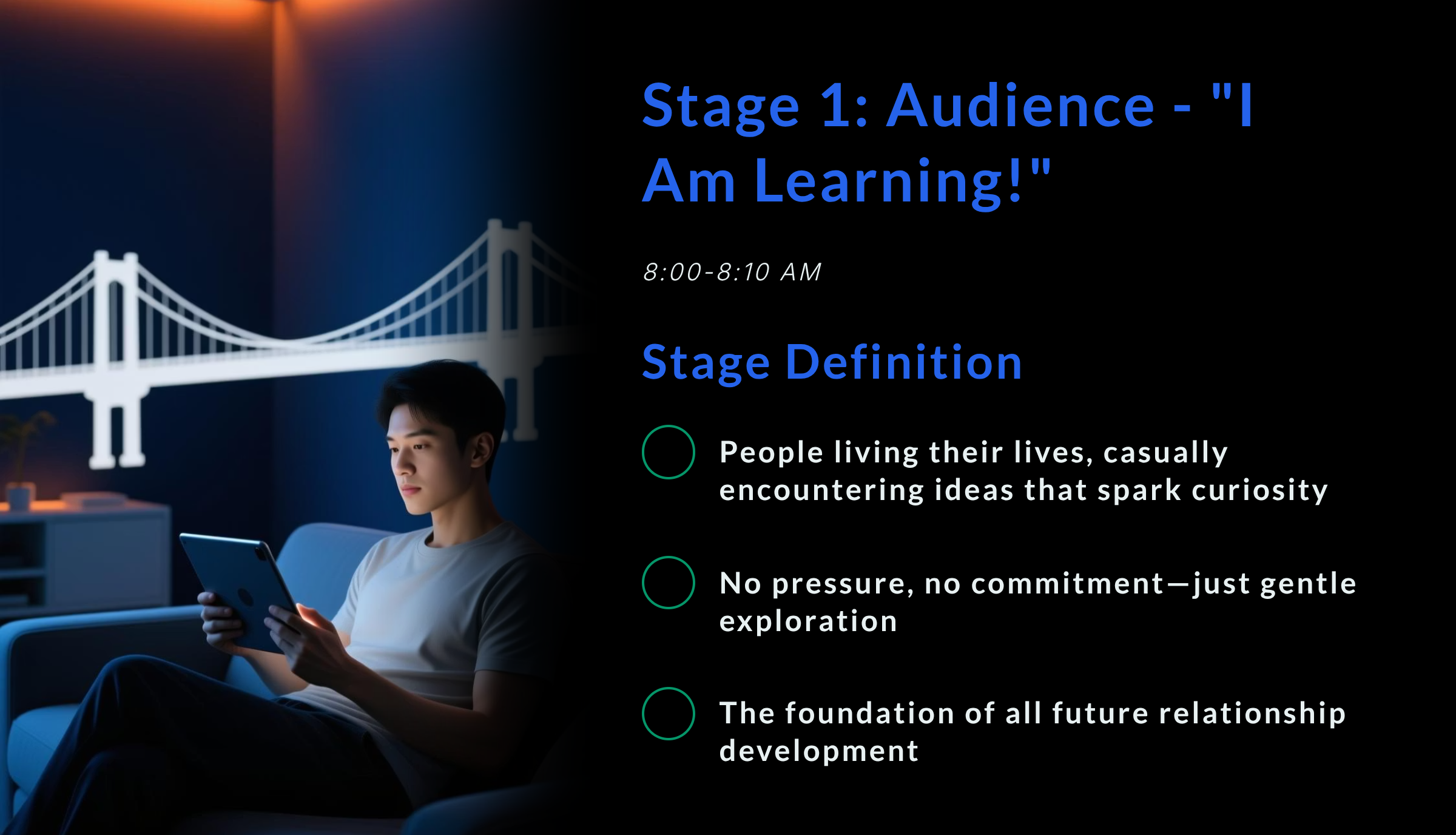
{% video_player "embed_player" overrideable=False, type='hsvideo2', hide_playlist=True, viral_sharing=False, embed_button=False, autoplay=False, hidden_controls=False, loop=False, muted=False, full_width=False, width='1920', height='1080', player_id='196799664177', style='' %} Exploring the Audience
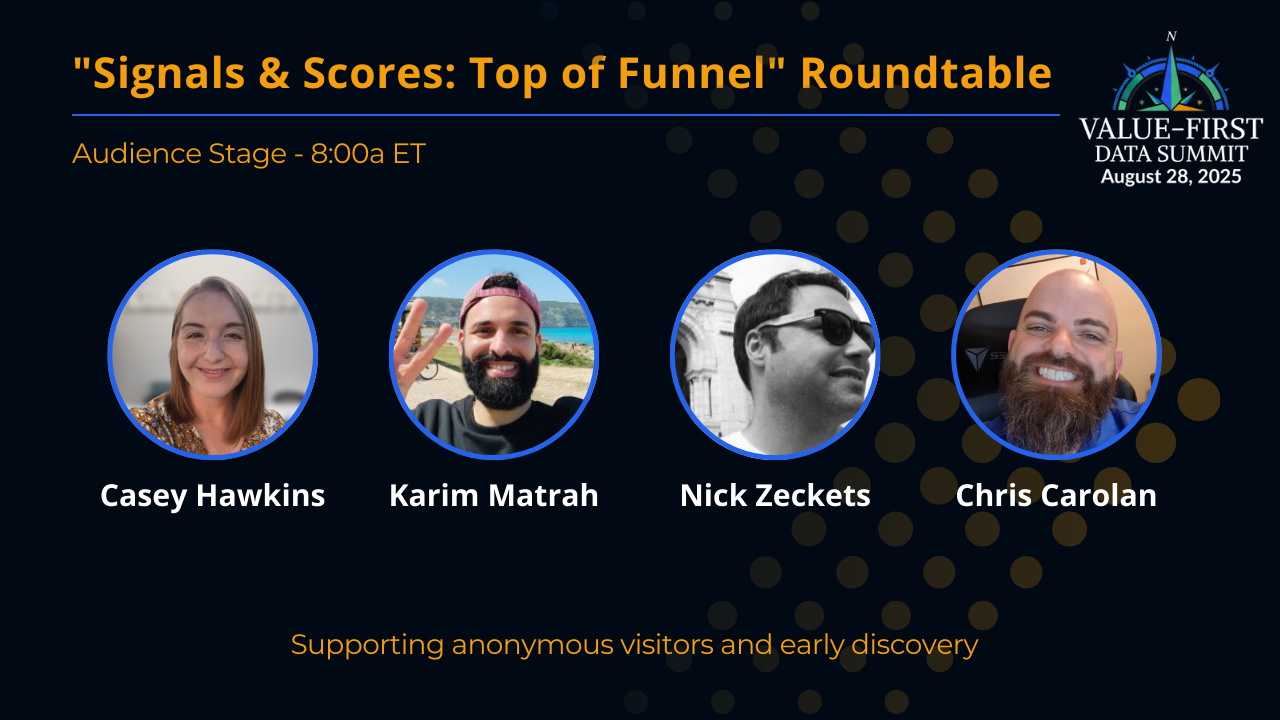
{% video_player "embed_player" overrideable=False, type='hsvideo2', hide_playlist=True, viral_sharing=False, embed_button=False, autoplay=False, hidden_controls=False, loop=False, muted=False, full_width=False, width='1920', height='1080', player_id='196848650001', style='' %} Setting the Stage: The
Subscribe to Value-First Data and never miss an episode.
Courses, playbooks, interactive tools, and data model examples. Everything you need to transform your CRM.
Your donation helps us provide free resources and office hours to the community