Value-First Data
Unified Revenue View Part 4: Scope Decision
Watch Episode →

Generated via AI Transcription (Gemini)• 90% confidence
[00:00] **Introduction** Casey Hawkins: Hello, good morning, good afternoon, good evening, LinkedIn. Welcome back to another episode, Value First Data with Clemen. I am again hosting, co-hosting, I guess this is a co-host situation.
[00:17] Casey Hawkins: Yeah. As Clemen and I continue to investigate what the value first uh path looks like and how data can support us there, right? That's basically what we're doing. Klemen Hrovat: Yeah, I agree with you.
[00:33] Casey Hawkins: Is that what we're doing here? Klemen Hrovat: Uh, looks like you uh, Chris allowed you to, you know, join me again. Casey Hawkins: Chris did allow me to join me again. Klemen Hrovat: [Laughing]
[00:48] Casey Hawkins: Uh, yeah, if you want caught us last week, um, Chris told me, quote unquote, if it goes well, maybe you can join on a reoccurring basis. Um, and I got the reoccurring invite this morning. So he took the full week to really think it through, but uh, but we made it.
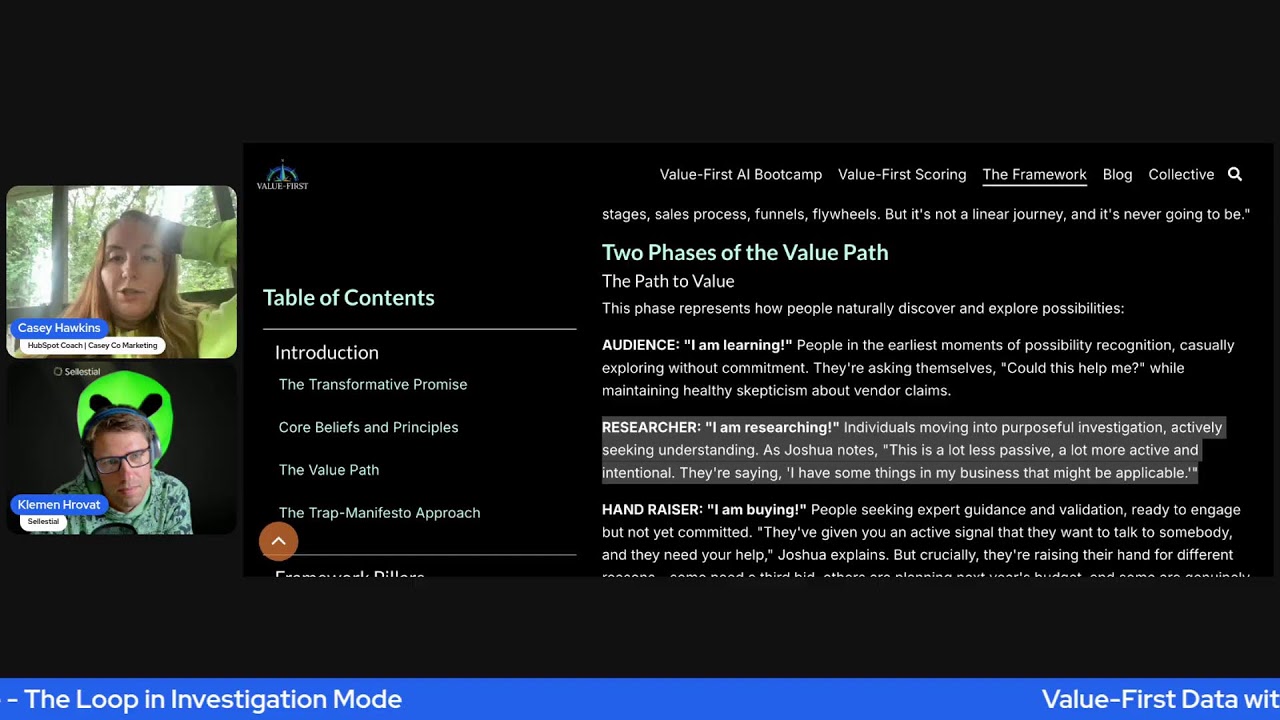
[01:10] Klemen Hrovat: Yeah, glad to have you again here. Casey Hawkins: Thank you. Um, if you missed last week, we talked about the first stage in the value path, which is. Casey Hawkins: screen. Casey Hawkins: I'm wondering. Casey Hawkins: Um, so last week we talked about the audience stage, which is the I am learning stage. Um, and these are people who might land on your website from your blog, um, maybe even from AI nowadays, um, where they were researching something, um, that you happen to talk about and, um, landed on your website. Casey Hawkins: Um, they're not really in a buying cycle. They just had a question that you just so happened to have the answer to. Casey Hawkins: Um, but today we're moving on from the audience and over to the researcher. And these are going to be individuals moving into purposeful investigation, actively seeking understanding. As Oaks notes, this is a lot less pressure, a lot more active and intentional. They're saying, I have some things in my business that might be applicable. Casey Hawkins: Um, important to note here these are not hand raisers yet, as you can see. That's where we'll be back next week. Um, but I think that's an important distinction up front.
[02:28] Klemen Hrovat: And I think a good opening for a question I want to start with, which is scoring and the challenges around scoring. Casey Hawkins: Yes. Klemen Hrovat: You are the scoring experts. I'm really curious to hear your thoughts. Uh, I I see how things can go wrong, especially now the the audience is more of, hey, you know, I'm I'm just looking around. Klemen Hrovat: I'm I'm I'm learning, so you're not necessarily doing a lot of things, let's say on the website, but when you, uh, when you're at the researcher stage, you are kind of, you know, actively researching. You're you're still not at the, you know, hand raiser or the the hero stage. We'll get to that, but scoring can, you know, quickly point out those to be in the active buying mode. Klemen Hrovat: Um, how do you, you know, how do you see an approach on that? Casey Hawkins: Yeah, I mean, I often say hand raisers are the easiest to score. Those are just, I mean, like they are people who have asked to talk to your sales team. Um, it is a lot more nuanced when we get into these researcher and audience stages. Um, I think, um, and I think I mentioned this last week that from a scoring perspective, your goal is I think, your goal is almost to get rid of this audience stage. Casey Hawkins: Like, how can you exclude them from getting positive scores? Um, and that's to me how you differentiate using a score to identify like researchers from just an audience. Um, you look at the behavior on your website and then you in my opinion, exclude anything that is more of the like I'm learning. Casey Hawkins: And to me that looks like have they how many times have they visited my website? Like having a minimum, not just scoring them every time they visit my website. Um, and the first time they land on my blog, not necessarily giving someone a score for that, but instead scoring them once they reach our blog, our blog like a couple times. I know I keep, I mean, I say I keep using myself as an example. I mean, what else am I to do? Casey Hawkins: Um, but, um, I talk a lot about lead scoring. I have a lot of lead scoring content. Once someone starts visiting my website, visiting my lead scoring content multiple times, that is to me an indication that they are in the researcher stage. They're not just like passively audience stage. Casey Hawkins: The other piece, um, this might get me kicked off the show actually once Chris hears this. Casey Hawkins: [laughing] Casey Hawkins: is the is the gating of content. Uh, and this is a delicate balance because like you have to decide when to gate. And people in the audience stage, I'm learning are going to be un, we talked about this last week. They're going to be unlikely to give you information. They're going to be unlikely to give you reliable information. They might give you like a their junk email address or something like that. Casey Hawkins: Um, hopefully, by the time people are in the researcher phase, they feel like they've learned something from you. So this is these are the people that might be willing to give you accurate data. Um, so from that standpoint, like you you oftentimes may not even have people in the audience stage to score because you don't have them saved in your CRM. Casey Hawkins: Did that answer your question or did I just dance around you? Klemen Hrovat: Yeah. No, no, no. I think it's uh a good way in. Uh, I I would, yeah, I would agree with that that, you know, when you're at the researcher stage is where you are, let's say convinced about, you know, someone you're researching, uh, a consultant, uh, um, a product, uh, a website to the extent that you are spending more time, you are going down the rabbit hall on that website, you know, download white paper, download PDFs. Klemen Hrovat: And because you're in the researcher mode, you're willing to to share your own data. It doesn't mean that I'm, you know, a hand raiser or or or a hero. I'm not necessarily in the buying mode, but I feel already comfortable sharing, you know, who I'm, who am I uh to you because I am actively learning and I'm convinced I want to learn more. Klemen Hrovat: That's why I'm researching further. Um, and the other part, as I see is also, you know, different parts of the website might be, you know, indicating that if it's a high level, you know, blog post, which is relevant for the audience stage, if they visit it, fine, but if they start digging deeper and they go in the, you know, more technical, maybe white papers, that might be, you know, a sign that, yes, they are in the researcher stage. Klemen Hrovat: Um, so the, you know, the the number of of website visits or or blog posts read might be still the same, but the the quality or the intent of the of of what they're searching and what they're downloading might be different, which might indicate they're at the researcher stage. Um, and to the gating part of the content, which I think, you know, the whole value first approach is, this is where you should still provide a lot of value for free, not necessarily gated because they are, you know, researching on their own. Casey Hawkins: Yeah, so I also, I think you're right and like when we look at the researcher stage, this is beyond blog visitors now. We're talking pricing page visits, things like that. Um, I know Clemen, you had mentioned, you can tell if someone's really interested because they start visiting like your terms of use or terms of service pages. Klemen Hrovat: Privacy. Casey Hawkins: Privacy, privacy pages, yeah. Um, demo pages are also going to come in here and I think this is where most people respectfully get it wrong with gating. Um, so often we're gating our demo. Um, and it's just stopping people from becoming hand raisers who may otherwise be hand raisers. Um, I'm I mean, there's a time and a place obviously, you know, you're going to at some point often provide a custom demo and you will need their contact information probably to facilitate that. Casey Hawkins: Um, but do you need to gate your demo video? Um, I would almost always argue, no. Klemen Hrovat: For the yeah, the generic high level five minutes demo, there's no point of of gating it. Um, that's our approach, let's say on our on our website. There are, you know, five minutes short videos, overview of the system, which is I believe, you know, good enough and deep enough for you to understand and evaluate what it is about, but to really understand the power and the potential and evaluate if that is relevant for you, we ask you to go in a demo. Klemen Hrovat: But but not to to gate it, but to to explain you because it's not, you know, a one click solution. So so where where, you know, your your platform is more technical or or if you're, you know, SAS system is is not like, okay, this is a a to-do list of something, which is know super straightforward and in in three minutes you can clearly explain what it is. Klemen Hrovat: If you need 15 minutes to walk through in a in a in a, you know, a structured way, then at that point, I think it makes sense to to have, you know, a a a demo or a thorough demo gated. Um, but yeah, the the initial overview should definitely not be gated. Let them figure it out like you do and share content on LinkedIn. Klemen Hrovat: It's for the same purpose to evaluate to go further. Um, and with all the AI research and everything, it will be more and more important. Casey Hawkins: Yeah, and I whenever people talk about ungating generally, there's a lot of fear behind it because people feel so invested and in their email list and their MQL counts and things like that. Um, but the the problem with the problem with that is that we are we're talking about email lists and MQL counts. Casey Hawkins: We're not talking about customers, we're not talking about sales. Um, and oftentimes the people who want the people who are going to see your demo and want to buy are going to still do that whether or not they gave you their email or not off the bat. And in fact you're going to have more people seeing your demo, which in theory, assuming that your demo is well done and explains things well and that your product is well done. Casey Hawkins: Assuming all of those things, um, you'll also, you know, you'll see you'll see uh better results. Klemen Hrovat: I I I saw a post from I don't know, from someone from Hubspot or from someone talking about Hubspot, I guess yesterday on LinkedIn, uh, where it was, you know, Hubspot claims the the number of demos went down, but the quality and and the kind of the conversion from demo to to to paid and and and the the the close time went, you know, improved because a lot of research is happening elsewhere, not necessarily through the demo. Klemen Hrovat: If you're, you know, omnipresent, if you, you know, if if you play the loop game, um, people do, you know, research on their own. And when they really raise their hand and when they're at the hero stage, they are far further in in everything and you have the credibility and they already made their mind. Klemen Hrovat: So they're further down in the pipeline if you will. Um, but when you're when you're a researcher, it's really important for you as a researcher to just confirm the trust, the the, you know, the tone of voice of of that company, the consistency to to align your mind with what they're saying, what their solution is. Klemen Hrovat: So then you are, you know, then ready to to raise the hand and go to the next stage when when you are ready. Casey Hawkins: Yeah, I mean, I think from like audience to research is when people go from like do do I think these this person, brand, whatever has valuable things to say to does this person or brand have value to buy? Like and that's what they're starting to try to like, that's what they're starting to figure out in this stage. Casey Hawkins: Um, they have not figured it out by the end of this stage. You know, we're not saying hand raisers, I mean, it says I'm ready, I'm buying. That doesn't necessarily always mean I'm buying you. Uh, they could still be evaluating you and your competitors, but it does mean they're saying I'm in a buying cycle. Klemen Hrovat: Yeah. And, you know, how how loop fits in into all that and and just, you know, omnipresence and and and everything. If you, if your voice, if your, you know, positioning is consistent on on different channels, on your website, on LinkedIn, on YouTube, wherever you manage to be, um, it things will be easier because they they'll be researching on on on on different platforms at their own time and they will, you know, puzzle up what they see. Klemen Hrovat: And and you will build the credibility if if you're consistent in in what you're saying and how you position yourself. Um, and they will at some point, you know, go deeper with your content, with your case studies, with um, with engaging even maybe on on on your content on LinkedIn. Um, maybe they'll make a connection request. It doesn't mean they're, you know, hand raisers. Klemen Hrovat: Uh, but they just keep seeing you for the same topic over and over again on their on their feed. So they are saying, you know, as a researcher, okay, I'm I'm learning about that topic from that person, so I will just, you know, connect uh to make sure I keep seeing that content on my feed. Um, and and that's why, you know, the consistency of your messaging is is super important. Casey Hawkins: Um, so we mentioned that loop there is a loop at each of these stages. Um, what does the loop look like at the researcher stage? And how is that different than the audience stage? I can give my answer if I'm putting you on the spot. Klemen Hrovat: Um I I think it's that, you know, consistency of of of your messaging across all the all the channels. Um, and thorough and concrete case studies, um, solutions how you help others, uh, proof points, social proof. Um, and and kind of more deep content, for better of worse whatever that is. Klemen Hrovat: Um, so that's, you know, are not that high level overviews which are, you know, for for for the people in the audience, but when they kind of start to feel the pain, if you can help them understand better that pain or or even uncover the real pain or, you know, pull them into the further into the research, this is what kind of, you know, express tailor part of the loop uh can, you know, can can help you at that researcher stage. Klemen Hrovat: Um, to the to the amplify as I said, consistency across all different channels, uh, where, you know, they will remember you about something. Um, and then evolve is when they move to the hand raiser, you might see what they asked or what else they they wanted to get or when you have, you know, a a demo that we talked about. Klemen Hrovat: When they already are past the researcher stage, I would say that the evolved part of the loop at the researcher stage is is happening because you're getting feedback, you're getting more requests. Uh, if after a demo they would say, you know, for I know, for for some details about your compliance um or something. This is, okay, maybe I I should talk about, you know, the compliance stuff more openly. Klemen Hrovat: So when they're at the researcher stage, they can already gather that and they're kind of, you know, calm down that yes, it makes sense to to keep the conversation going with that provider. Casey Hawkins: Yeah. Casey Hawkins: Yeah, I think that's all really good um stuff. I think you're spot on. To me, at this stage, the, you know, we started that express yourself. I think you're totally right. Like I think you're just expressing yourself in a deeper way, um, than you were at the audience stage. Casey Hawkins: Um, this is where again those demo form, those not demo forms, those demo videos might come in. Um, uh, the case studies, so any social proof, like that's where you are at this stage. Um, and then you might be tailoring the approach, but not necessarily, it doesn't have to be so personalized because you still may not know the individual at this point and you don't have to. Casey Hawkins: Um, but, you know, you can still segment your content by roles and industries that can be self-selected. Like that's where you'll see, you know, menu navigations that will show you use cases by industries and indus and use cases by your role. Um, I think I think that's very important content for this research stage. Casey Hawkins: Um, and that's where maybe you have technical documentation and even if you don't think that's important to your audience and um, that's where some of this like self-selection is going to kind of come into play. So for me, the tailoring your approach is having diverse um, content for people within the buying committee, even when you don't know who those individuals are. Casey Hawkins: Um, and then amplifying your reach is going to be making it easy for people to go from audience to researcher with but the the caveat there is, it should be easy, but shouldn't be like in their face. Like it shouldn't be annoying. Casey Hawkins: And and not necessarily gated. Casey Hawkins: And not necessarily gated, yeah. Klemen Hrovat: For the for the sorry to interrupt just I thought before it slips through, uh, for the tailor part, how I like to also think about, you know, LinkedIn posts. Um, I I I I attended a workshop from from one of those, you know, LinkedIn gurus and I think he he made a really good point. Think about, you know, he calls them, you know, sign post when you're, you know, creating a content, when you're making a post on LinkedIn, think about who is, you know, your target persona for that concrete post. Klemen Hrovat: And make it clear, I don't know, first three, four lines that someone who starts reading that understands if that is for them. And that can be, you know, hey, you know, this content is for sales leaders. If you're a marketing leader, just go away. You know, this is this is for that persona or for that industry. Klemen Hrovat: That's kind of, you know, sign post in a way that when you're driving, if you turn left, you immediately know if that was know the right turn or not. Um, like like here as I said, if you if you want to tailor for specific personas for specific audiences, um, that's how you can also think about. So think for whom you're writing that content piece. Casey Hawkins: Yeah. Casey Hawkins: Um, I know we need to wrap up, um, but just to bring us down to Earth and to implementation, um, you know, coming and I think you touched on this on like from a data perspective, if we're not tracking the volume of our form submissions for demos, like five minute demos, if we're not, you know, if we're not gating stuff and building our like email list in traditional ways, how, how can we measure, how can we measure if we're doing if we're seeing any progress in researchers and if we're getting people to researcher stages? Klemen Hrovat: Good question. Um Part of it is when when they when, you know, people move to the hand raiser stage, do they kind of tell you they've been seeing your content? That's that's what that's how I feel comfortable and and and kind of calm down about my activities on LinkedIn, when people connect and we start chatting over DMs, they, you know, they mentioned, hey, you know, I I've been seeing your content for a while now on my feed. Klemen Hrovat: That's why I reached out. Which is, okay, you know, it's it's consistent enough that they they want to keep the conversation going or even start a conversation. Um, I I don't think necessarily there is, you know, a hard numeric data because if you don't know who those people are, I think I just kind of retrospectively understand if if what you're doing at audience and researcher stage makes sense when they come to the hand raiser where they show up, they, you know, book a demo. Klemen Hrovat: Um, so yeah, it's not necessarily something you need, you know, super rigorously measure uh by numbers. Casey Hawkins: Yeah, I think it's almost and again this is not I know this isn't a number either. Um, but I think it's how easy that hand raiser conversation is. Like do are people showing up for whatever your hand raiser conversation is and are they like all I want to know is how much you cost because my boss asked me to evaluate all these tools and I need to include the cost and I couldn't figure it out from your website. Casey Hawkins: Like that's all I want to figure out. And then they're just like, you know, leaving the conversation or checking out from the conversation from there. Or are they like are people showing up to those hand raiser conversations with genuine interest? Um, I think that's to me how you know if you've done your researcher um justice. Klemen Hrovat: Maybe interesting data just came to my mind is, you know, if if you have the the demo they can book, the the percentage of demo no shows can kind of indicate, you know, if if that's high, if people book a call but they they don't show up, then probably there's something missing. You you didn't do everything before that you should. Klemen Hrovat: Um, but if that, you know, show up rate is is is high then I would say, you know, you're doing a good job at audience and research stage with everything you're doing. Casey Hawkins: Yeah. Casey Hawkins: All right. I think that's fair. Uh, I think my takeaway from today is not not to stress the data in these first two stages. I know this is a bit this is value first data. But like, but I I think my takeaway from the last two weeks Clemen is that I think people care too much about the data in these first two stages and that's causing them to put friction into the buying experience because they care more about the data than providing a good buying experience. Klemen Hrovat: And a value. Casey Hawkins: Yeah. Casey Hawkins: Yeah. Yeah, uh that's my kind of takeaway uh to I was, I was speaking at a conference um last week, um, and I got a question, you know, how and and and what do you necessarily need to measure when you're, you know, building your your brand? And and this goes to, you know, audience and research stage. Klemen Hrovat: And and my answer was, you know, don't stress too much. Don't try to to measure things that don't need to be measured. Um, rather focus on on on be there, build the brand, build the voice, amplify. And you'll have other metrics which are more important for for your business down the down the line at at all the, you know, further stages. Klemen Hrovat: Hand raiser starting next week, uh discussion we'll have. Uh, this is where, you know, more solid data can be collected, measured and then evaluated. It will be way more actionable for everyone involved. Casey Hawkins: Yeah. Casey Hawkins: All right. Well, yeah, next week we'll be back. We'll be talking about hand raisers. This is where I think a lot of this data really comes into we get to see the fruits of our labor in the first two stages, I think, in the hand raiser stage and I'm really excited to to take a look. Klemen Hrovat: To get to the data discussion at the value first data. Casey Hawkins: To get to the data. Casey Hawkins: All right, have a good day everyone. We'll see you next week. Thanks. Klemen Hrovat: Thanks everyone. Take care. Casey Hawkins: Waves.
More content you might be interested in.
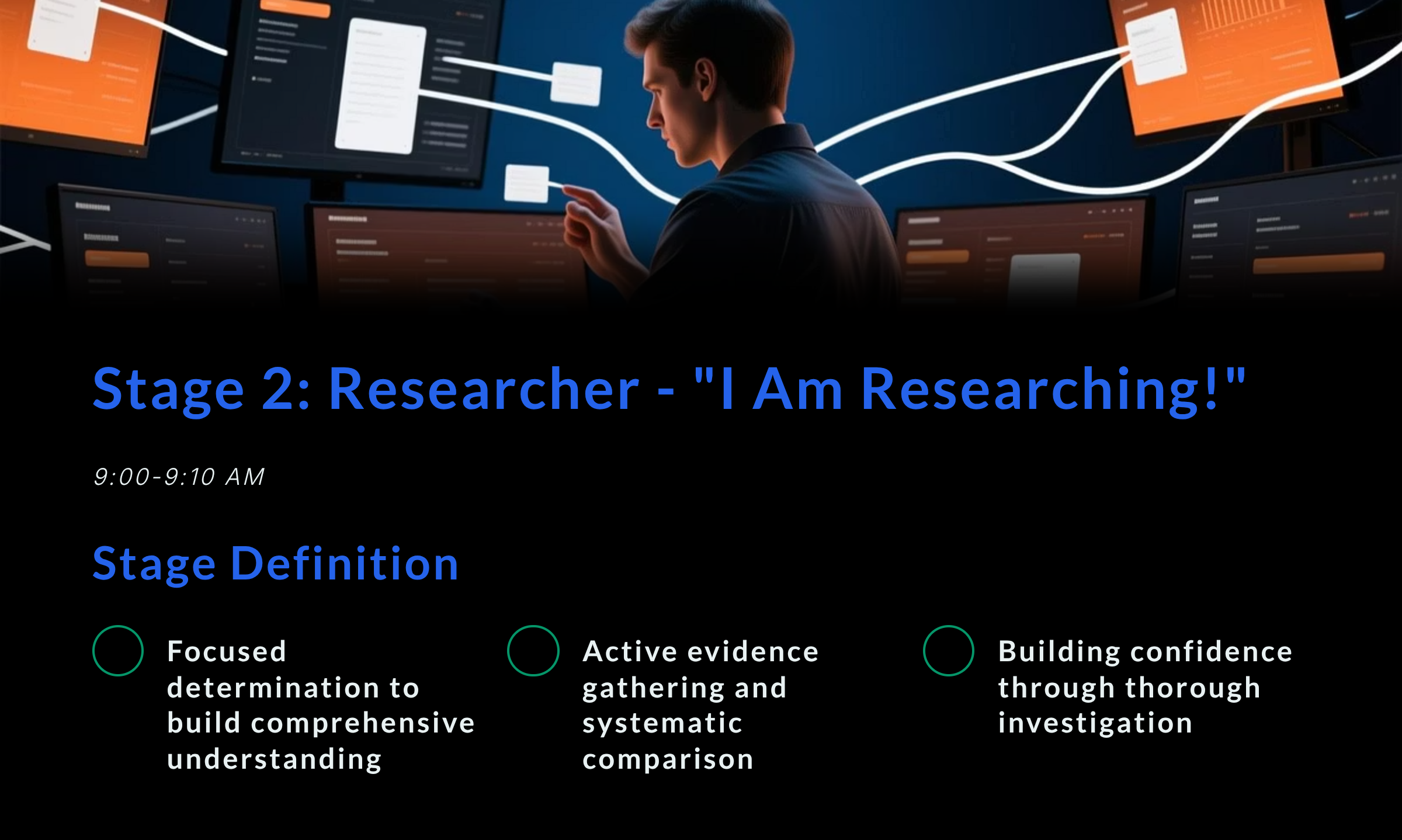
{% video_player "embed_player" overrideable=False, type='hsvideo2', hide_playlist=True, viral_sharing=False, embed_button=False, autoplay=False, hidden_controls=False, loop=False, muted=False, full_width=False, width='1920', height='1080', player_id='196850663956', style='' %} The Researcher Stage:
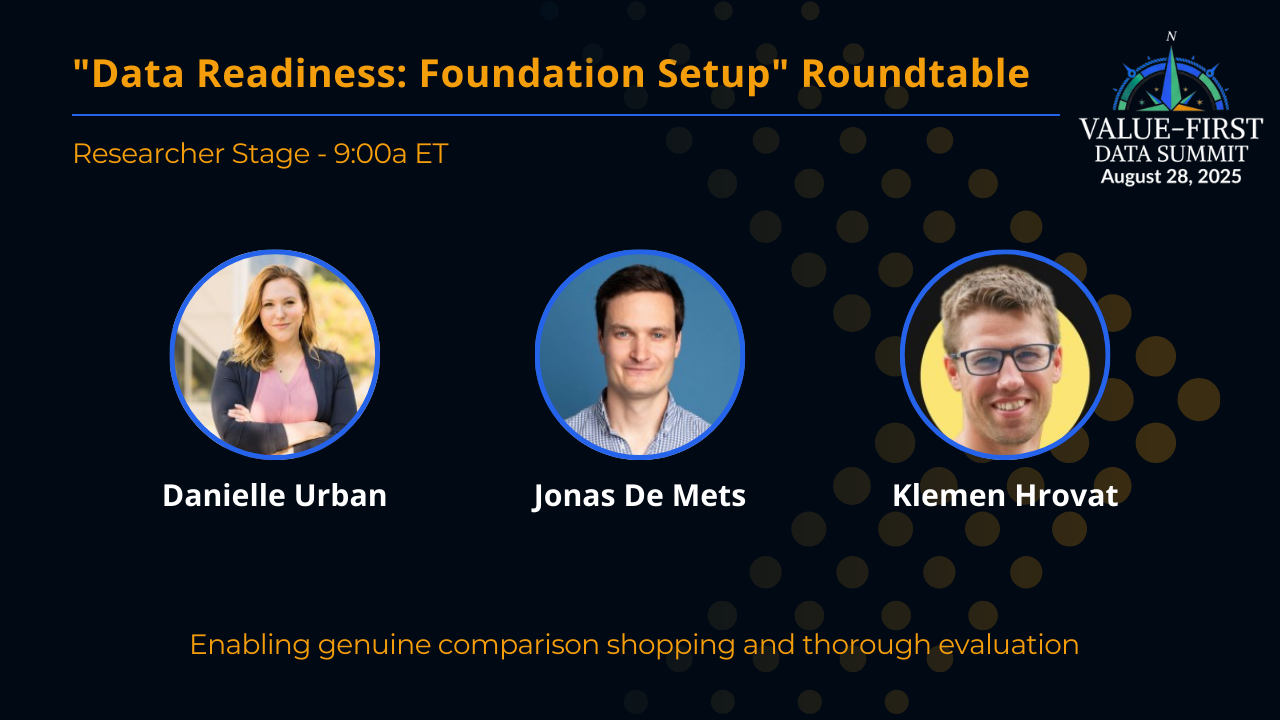
{% video_player "embed_player" overrideable=False, type='hsvideo2', hide_playlist=True, viral_sharing=False, embed_button=False, autoplay=False, hidden_controls=False, loop=False, muted=False, full_width=False, width='1920', height='1080', player_id='196803267116', style='' %} Setting the Stage: The
The Researcher stage represents a critical shift from casual interest to focused determination. People in this stage have moved beyond gentle curiosity—they're now actively investigating specific approaches, building comprehensive understanding, and gathering evidence to support confident decision-m
{% video_player "embed_player" overrideable=False, type='hsvideo2', hide_playlist=True, viral_sharing=False, embed_button=False, autoplay=False, hidden_controls=False, loop=False, muted=False, full_width=False, width='1920', height='1080', player_id='196851345200', style='' %} At the Value-First Dat
Subscribe to Value-First Data and never miss an episode.
Courses, playbooks, interactive tools, and data model examples. Everything you need to transform your CRM.
Your donation helps us provide free resources and office hours to the community