Value-First Data — The Curation Engine: Why the Surface Isn't the Value

📅 June 9, 2026
Share: LinkedIn X

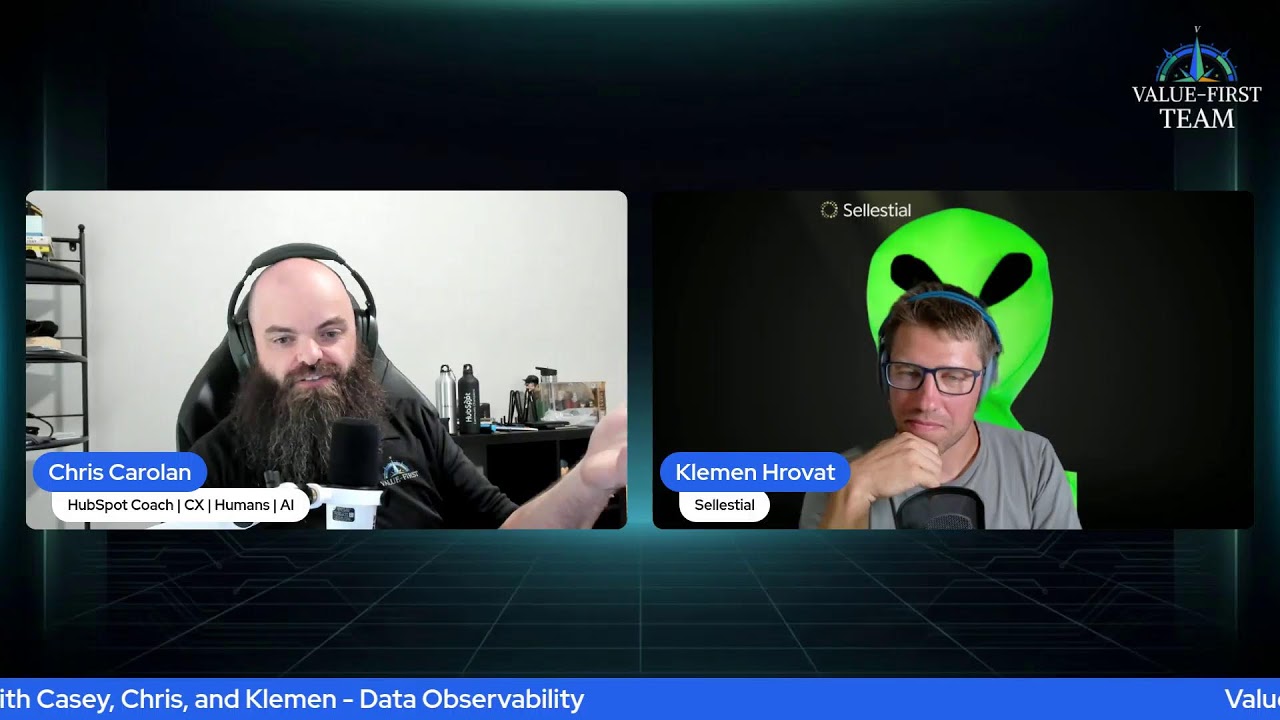
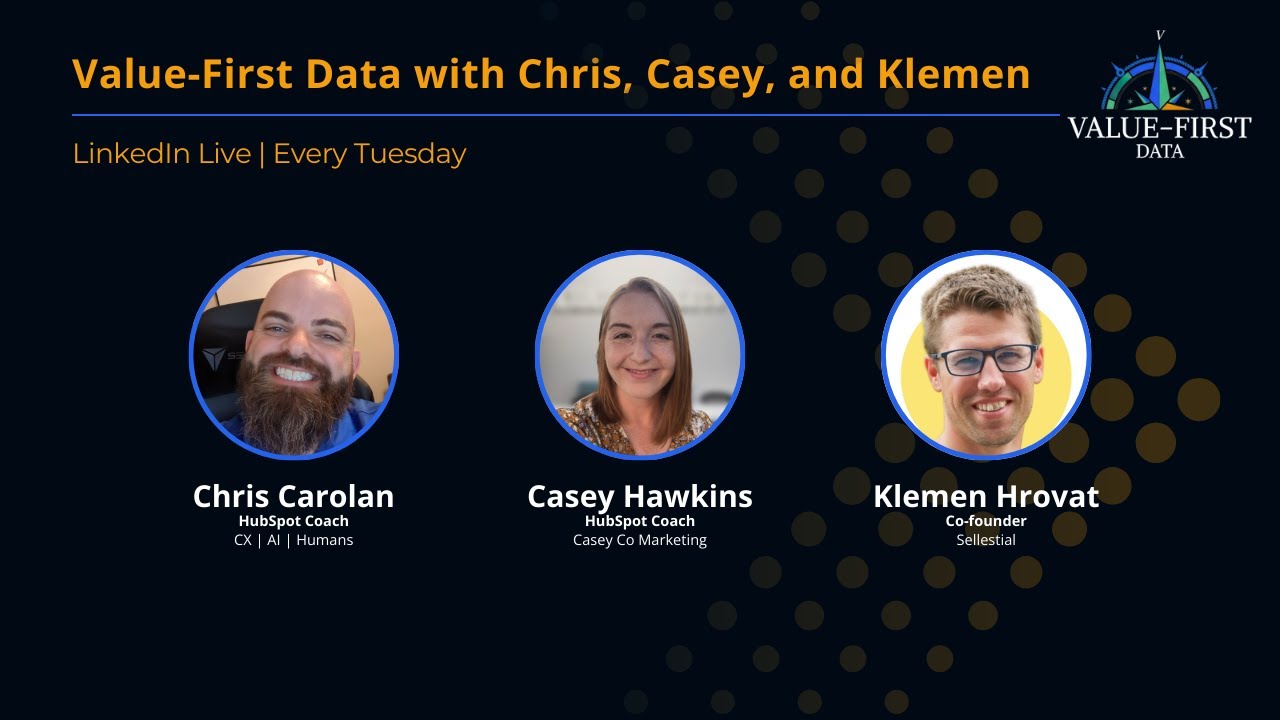
In this episode of Value-First Data, Chris Carolan, Klemen Hrovat of Sellestial, and Casey Hawkins wrestle with one question: if AI makes the build the easy part, what is the value a partner actually delivers? They land on curation — getting context, process, people, and data into a unified, AI-available state — as the real product, and on keeping the human in the loop for the five minutes that capture or lose a conversation's value.

Key Takeaways

1 The build is no longer the value: "if the build is the easy part and you're not selling the build anymore... what is the value that we create, provide, deliver?" The value is delivering something that actually works.
2 Expertise is the difference between a build that works and one that doesn't — Klemen frames it as $5,000 and nothing versus $10,000 and something real.
3 Reliable AI is not a $20 "throw it in Claude" exercise; a proof of concept is one thing, a dependable production process is another level of complexity that needs thoughtful design.
4 Stop demanding AI ROI the way you'd demand capital-equipment ROI. AI is infrastructure now, like your laptop or Microsoft Word — nobody calculates the ROI of those.
5 Attributing outcomes (like better sales-and-marketing handoffs) is genuinely hard, because too many things move at once; the answer is new visibility into value, not the KPIs of old.
6 The 5%/95% rule: AI gets you ~95% of the way, but the last-mile 5% (the typo, the misspelled graphic, the weird interpretation) is where human expertise has to live — and where builds quietly die.
7 Keep the human in the loop, not out of it: the goal is the five to ten minutes right after a conversation, while the aha moments are fresh, where the person who was there adds context the raw transcript can't hold.
8 "AI availability" of context: if your knowledge lives in 600 PDFs or one super-user's head and isn't in an AI-readable, unified, shared place, AI can't act on it — it's as good as blank.
9 Curation is process + people + data brought into one trusted, unified view, so anyone — human or AI — who looks at it has the context, trusts it, and knows what action to take.
10 Dashboards can't fix a broken foundation: no AI brief helps if lifecycle stages are unclear and ERP and HubSpot are disconnected. You have to solve the context and data first.

Show Notes

Key Topics Covered

  • The build is the easy part — what's the value now
  • The real cost of reliable AI vs. the "$20, throw it in Claude" myth
  • Expertise as the difference between a build that works and one that doesn't
  • Measuring AI ROI / AI as infrastructure
  • The difficulty of attributing value (the laptop / Word ROI analogy)
  • The 5% / 95% problem and last-mile human expertise
  • Keeping the human in the loop after a conversation
  • Processing the transcript while you still remember the aha moments
  • "AI availability" of context (bioavailability analogy)
  • Unified customer view and trusted, shared context
  • Curation as the deliverable — the surface isn't the value
  • Why dashboards fail on a broken data foundation (disconnected ERP/HubSpot, unclear lifecycle stages)

Enjoying the Show?

Subscribe to Value-First Data and never miss an episode.