Value-First Data
Unified Revenue View Part 4: Scope Decision
Watch Episode →

The elephant in the room: Everyone talks about adoption. Nobody labels the stage where it happens.
Generated via AI Transcription (Gemini)• 90% confidence
[00:00] **Introduction** Klemen Hrovat: [inaudible]
[00:11] Casey Hawkins: Good afternoon, good evening. LinkedIn Friends Value First Nation. Welcome to another episode, episode seven of Value First Data, where we are taking you through, uh, the value path stages. And today, Klemen, it's time to talk about the adopter stage. How are you doing, man?
[00:51] **The Adopter Stage** Klemen Hrovat: Doing really good. Um, as told before went live, things are, things are going together. Breaks all. You know, seamlessly coming together, really easily. Um, last week was really eye opening for me in terms of value path and everything we've been discussing for for a while. Uh, not live and live, uh, and all the documents, everything. Um, it's really interesting. When you, when when someone starts a discussion with you, describing what they want to do with something they've been now thinking for for two hours in the morning, explaining what why current life cycle stages are broken, why they are fighting internally, what they would like to do. And then they describe exactly what value path stages are. With their own words. And then you just, you know, I just then mentioned the eight stages of the value path. Anyway, okay, tell me more. Oh, tell me more. Oh, yes, yes, yes, this is what I need. I just it's already framed in the right way. It's it's more clear what it is. Um,
[03:00] Casey Hawkins: That's feeling good. That's for sure. Klemen Hrovat: It feels good, yes. Casey Hawkins: Right. And because it's we're not like, it's not rocket science, right? Like we're and this is one of those things where AI, whether we know it is or not, is driving us as a race toward simplicity. Um, like literally we're all enjoying the experience of of natural language communication to get things done. And it doesn't go well when you don't use natural language to try and, you know, um, make an inquiry of AI and watch it get the acronyms wrong. Even when it knows you, right? Because it just leaves that door open to misinterpret it based on this other word. It's just trying to predict the next word, right? And if you use ambiguous things, not that there's, not that there's a ton of English words that are super ambiguous, right? But we all know, like, we know how bad the acronym game is in every single industry, right? And AI is not here for it, right? Like we can't use it effectively unless we do all this work, which we're not going to do, to give it all the contexts and say this word means this and this word means this. And the moment that it changes, like now you're going to go through all of the documents, right? So, um, I I want to show people, you know, what we're talking about. Uh, if this is your first episode, what the hell is the value path and what why is it easy to understand, right? Because we're using words that describe the human being outside of our company. There there's also internal moments, right? It's any human being has these eight stages that they can go through in a relationship where value creation is trying to happen, right? So you have audience, we've already been over the first five, which is audience, I am learning, researcher, I am researching. The nuance between these two is it moves from let me unintentional, uh, indirect to intentional and direct. Like saying very similar activity, but the intention is there for researchers. Handraisers, again, and I I think this is the front side of what we're going to talk about today, like where uh, something so obvious, like we say in meetings that we want more handraisers, yet nothing in the CRM says handraiser on it. It says leads and MQLs, right? Maybe we just use the word that we all say and that like we don't have to define, right? Here, we have buyer, right? Our latest edition to the party, but we use buying roles, we use like are they bought in? Use words like that. Do you have the buying you need? Like that's the mission of this stage is making sure you've uncovered all the stakeholders that are required to buy in so that you don't get the rug pulled out on your firm from under you, or that you don't get immediate clawbacks after like you win the sale, right? So those are the first four stages. Um, and then after deal activation, right? Value creator, whoever's involved here. And so this is a a a big change from customer as the label here in most CRMs and out of the box HubSpot. One is because like if we're trying to define a customer journey throughout the process, like it doesn't make sense to wait until here like to label them as a customer. Two, we need to find ways to differentiate this part of the journey, right? Which is what we're going to get into today with a doctor, right? One of, if not the biggest, most important statistic is adoption rates, like to determine success of any any product, anywhere, like any experience, right? Um, Netflix as an example. Like I get the free trial and then I don't watch it. I don't use it the whole month, right? I still got this old way of doing things, so got access to Plex or whatever whatever. Right? I'm not renewing. Right? I haven't adopted the service, right? But when you hook me in, like Stranger Things coming out next week, season five, I'm excited about that. I have I've had a Netflix subscription for four years because of the free trial that enabled me to watch Stranger Things, like binge it, right? I'm all in. That was me understanding the the value of Netflix in that moment and I didn't it never even thought about like I canceling it at at that point. I there's probably lots of reasons I should have. Right? And we don't label this at all in our CRM, right? Well, the next two weeks we'll talk about advocate and champion. But so much of the conversation that we have relates to why do we need four labels, right? Why can't we just have customer and champion or evangelist, right? We're going to get into why. Um, but why do you think that we haven't taken a beat to to separate out this like audience in our CRM?
[11:00] Klemen Hrovat: Because the the lifecycle stages as they were used and adopted by teams are, from what I understand now of just talking to, you know, sales leaders and rev ops people out there, used to separate gardens of marketing, of sales and and customer success. It's kind of, you know, providing boundaries of, hey, this is my playground. MQLs are playground for marketing and this is a KPI they're measured out of. When someone is qualified enough, they go to SQL stage and this is where, you know, BDRs or or AEs take over the the communication to get them to closed one. And then if they're closed one, sales people, I'm done. I hand it over to whomever is a customer success manager and they own all the customers. And that was kind of enough. But it's no longer enough. Casey Hawkins: We didn't need stages, I guess, because there are no stages in this other system, like it's usage based. And and we'll definitely get into that, but that's a good point. Like, the challenge that SAS has created by solving for all these problems and silos, right? We didn't need that stage in our CRM because the team in the CRM was not responsible for that stage. Klemen Hrovat: Yeah. Casey Hawkins: Right? They they wanted to know. I mean, but did they? Did they want to know? Klemen Hrovat: I I wouldn't say yes to that. Casey Hawkins: Right? Uh, and and this is the the the you know, this is I think what now changed. Um, part of what I'm now experience also is in the past years the the cost of getting new people into the funnel, creating new contacts was way easier than it is now. The the old spray and pray game, the, you know, it's fine to reach out to 1500,000 contacts in a week. It was fine. If only five of them respond and book a demo, we have five demos and we move on because there are millions of people out there waiting to get our cold outreach email. This was a playbook that worked five years ago.
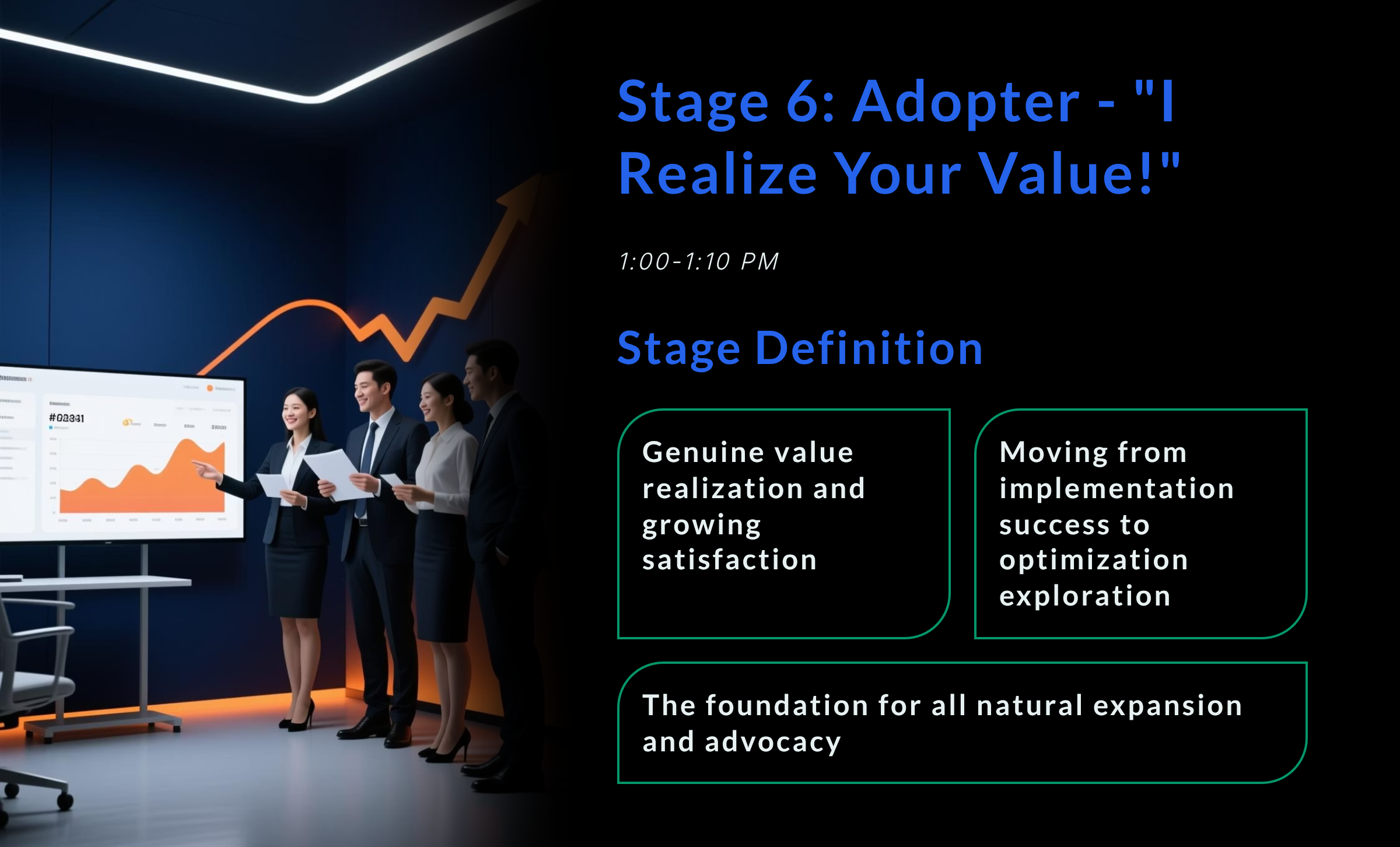
[14:49] Casey Hawkins: Yeah. And it no longer and like this is again when you think about like just coming down to the language that we use naturally, like value, like the fact that value first can be a revelation to be like we constantly talk about creating value, adding value, uh, you know, sharing value, even extracting value, right? But we don't name anything anywhere in the CRM value. We already talked about handraisers. Now, we have a a system winning by design, right? Comes out and they teach like onboarding adoption expansion. They start to break it up. And I thought I was going to have an easy time finding a diagram where that adoption stage is actually named adoption, right? And it's usually retention or impact, right? If we if we separated at all. In most cases, it's like active customers, like high usage customers maybe, or it's just customers, which doesn't mean anything to anybody, right? So it's another situation when you tie that to the 50% adoption rates of CRM and everybody knows how deep of a problem that is. Like we we create systems, right? Like customer success platforms are designed for that team to target this thing in a very siloed way, meanwhile, creating really bad handoffs just the flow, right? And so, again, this is why the the power of just using the words to to describe the like why is it important? Like are we tracking that anywhere? Um, is when I when I got to adoption, it it just made way too much sense, right? Like uh, of course, we want like that's the it changes the mission, right? Like instead of just getting to the customer stage, or in our case the value creator stage, like if you don't get to adoption, stage is failure, right? Even if you got the money, it's failure that you did not you did not serve the promise that you provided so that somebody could say, yeah, this was a good idea. Like this was a good investment. We got value from this thing, right? And getting people to to adoption stage is how you address churn, how you get to happy customers. This is the description of it when they adopt and realize the value you promised to bring and that they're actually using that value and and getting that value out of you. Um, if if people daily use a CRM, of course, it will be hard for them to switch to another CRM because they see the value and they are experiencing the value. If they log into a CRM once in two months, they already live without that CRM, even though they purchased a yearly subscription. So if if you only get to to value creator stay, which is know the first stage post closed one, as we discussed last week, um, and nothing as processes on your side, how you can enable them to get to realize the value by the time they need to renew or extend the agreement, you will have, you know, fires to put down because you haven't done what you should by by the time of when they started value creator stage and by the time when they need to renew or extend or
[20:40] Casey Hawkins: Yeah, and you might have created value like a lot in the first month. But since they haven't heard from you, like and like time has passed 10 months, they forgot about that value, right? And if you ask them now and you're like, yeah, I guess it was cool. Right? And that's that's I really need it. Casey Hawkins: Right, and that's where again, the nuance of this second half of the journey of value path is that there's three layers that I I knew I started to understand like we've got to break these things out. And just as this example, right? You've got, let's say, and this is where everybody in the org is that if you separate them out like this, these stages, you can understand like, okay, this person's adopting, but these this whole group of people like they're not touching it. Like we can't call them adopters, right? We we have no hope of renewing if this whole group of people, right? And it can be like on the side, like another team, or it can be up and down the org chart, right? How many times have we seen it where you have CRM power users and it makes you feel good about being able to renew or or uh, you know, um, add on the next tool, right? Get the get the AI credits going, right? But then when you see the sales manager still exporting data from the system, that immediately tells you there's a good chance that there's other people on the team that see that and know the CRM is not important and are not adopting it. When the sales manager has not adopted it, when the executives are not getting their reports from that place, right? So real quick, the three these three levels, individual contributors, what adoption means, they're in their daily, right? They feel productivity gains. Um, and and they've built some relationships with others on their team like through the platform. Uh, not necessarily like getting excited about using it, but they they feel good that if they set up the contact record, right? Right, then the next person on the team is in good shape, right? There's there's a additional relationship there that if you can catch wind of it, like it's it's very it's one of the easiest values to highlight as like, um, you know, very very hard to measure. Uh, so for, like, so data signals there, you know, feature depth usage, uh, support ticket sentiment shift, like, instead of questions, you get optimization requests, like, can we do this, too? Like that's it's I think every admin's favorite moment, right? You know you've got them on HubSpot as soon as they ask for something more, right? That's not just a fix. Uh, and then just naturally sharing knowledge with with others on the team. Um, at the manager level, adoption means the team, the capabilities of the team are getting better, right? Uh, if you've got people that are not using spreadsheets anymore and they're able to be present, they they like data literacy might improve, right? Um, having better conversations about, you know, the thing that that is happening, be an example. Uh, but you see process standardization working. So like reduced reduced errors, uh, you know, faster time, uh, onboarding for new teams, new employees, and confidence in the reporting. We're not spending every meeting like questioning the data, like for the whole meeting and then not getting anywhere. Uh, so data signals from that, team level metrics improvements, manager engagement in training and enablement, like we we have time, uh, for training and enablement and uh, we go from reactive to strategic. Uh, and then at the executive level, uh, what adoption means, like strategic value is being driven in some way. Uh, board and stakeholder reporting includes outcomes and not just like data, and there's a cultural change happening, um, that you can see. Signals for this, executive engagement in things like quarterly business reviews, like paying attention, like leaning into to to the data, leaning into the reporting conversation. Uh, renewal likelihood indicators, uh, and expansion budget discussions. Like, are they easy to initiate or not? Do you know where they stand? Um, and we'll show some examples of the activities that can create these signals, but as I go through all three, like what what comes to mind for you?
[27:54] Klemen Hrovat: This is where the you know, the data can show you, are they going from value creator to adopter stage? This is where usage data comes into play. This is where having all the emails and the customer support tickets in in one system comes into play. If you have all that, then you have the information to understand the sentiment, understand are they actively asking for more? Are they ask are they complaining through the tickets? Are they you know, where they are and then how many of them are engaged. Um, do you have one user out of 30 reps? Maybe this one could be a power user, but overall reporting can't work if only one person is using it as it should. Um, so a lot of a lot of data and then all the deduplication and and the right information. If you have five different company records for the same customer, separate to one of another, how can you understand what's happening at that company against you as someone who is delivering value? You don't have that visibility. And and we you don't necessarily feel the pain because you're not unaware of it. But then that leads you to, oh, that customer churned. Why is that so? If you pull together all those five companies and merge them into one record, you'll see why. But because data was not structured and and clean and connected in the right way, you might not see the the forest, but only see separate trees. Um, Casey Hawkins: Yeah. Klemen Hrovat: Definitely like we're like you can't silo it the data between the three groups. Um, you have to be able to separate though. Um, and this is what like before we get into the examples, I'm just going to hit like Luke marketing, we've been talking about Luke marketing at each of the stages. Um, it's just still like if you if you're listening to the market right now, Luke marketing is still uh, fairly confusing topic, um, to most people. And if like something I've come upon like since last week. Um, because I was on the HubSpot's uh podcast earlier this week. They've been going through, they've been doing two episodes per stage just to get through it. And they they've done the first two, express and Taylor and um, uh, I got to join them this week to to share my thoughts about just the way that they talk about it, right? And the way it's framed and how easily that takes people like in the wrong direction. And for me, it's becoming clear that this is the first RevOps framework that HubSpot has ever come out with. Meanwhile, RevOps as a function has been important for like the last five years, right? So, um, while it's called marketing, it's it's an operational framework. And when you understand that and you can detach it from life cycle stages and from the flywheel and from inbound, you understand that you have to do Luke marketing, this operational effort exists in all four stages at all eight stages of the value path, right? And here here is why, right? Like so express, uh, what to communicate, right? If somebody's in the adopter stage, you're focused on, you know, their wins, not not your case studies, right? Success story amplification, um, outcome metric validation, peer learning opportunities, like user community, best practice kind of stuff. And here here's what great looks like, benchmarking, right? At Taylor, like so those are the things like you want to focus on as far as the what, right? Um, for Taylor when you're personalizing, this is where are we personalizing to a individual contributor, a manager or an executive? Like you have to know the difference in order to get this right. So if it's individual contributor, daily workflow optimization tips, advanced feature tutorials. You ever try to give one of those advanced feature tutorials to an executive? They don't they don't watch, right? That's zero value. Um, and peer success same thing there, like giving a peer success story, the difference between, oh, like Klemen over here like had success with HubSpot versus celestial as a company had success with HubSpot. The executive wants to hear about celestial, the individual contributor wants to hear about Klemen, right? Yeah. Um, I'm not going to dig into more that that's how obvious this should be, folks, right? Um, for amplify, so the expansion strategy, like you figured out the personalization, it's resonating. Um, like internal wins visibility. And we're going to talk about this way more next week when we talk about advocates. But amplification is all about not um, I'm sure there's there's easier words to use because it's amplification. Like the the best way to amplify is not have one person like responsible for it, right? Or you as an organization are the only ones that can talk about your thing. So when you create visibility of the internal wins, right? Now every stakeholder can get involved in sharing and like the companies that do this on LinkedIn, it's very obvious when they do it, they they're all very successful, right? And it's because they have this transparency and they just need to share and you don't have to ask them to share posts, right? Uh, and this can be like adoption milestone celebrations as well. Uh, so gamification and recognition, uh, user groups, advisory boards. Uh, and then evolve. So continuous improvements. Feature optimization feedback loops. Like I love like when you just look at Luke marketing, HubSpot's doing it in like every scenario, like that's what it's how they operate. They're just they just got to help them communicate what the hell they're doing. it's challenging right now. Usage pattern analysis, like leading to personalization, right? Proactive friction removal by getting out on social and getting out on Reddit earlier, right? And having like, oh, these people, they're talking over here now, right? We're not going to wait for them to get to the website, right? And then when you can pull it all that together, you can create like expansion readiness scoring, right? Like, oh, this person's ready for for content hub. This person's ready for for agents and cleanup because the way that they're looking at these things, the signals are telling us this, right? Um, and the critical point is at the adopter stage, it's not about reaching more prospects, right? It's about deepening the relationship, right? Leveraging the value that's already been created and making sure that you multiply that value, right? With these current adopters. So it's internal amplification before external advocacy and that's it's a powerful shift to make. Um, but again, the reason these stages are so important is it puts you in a position to understand what the other human needs to be successful at that moment so that the situation you described where it's one power user and 30 people not using. I guarantee and this happens with HubSpot like that person was trained in a different way by an expert, uh, like maybe they they saw a couple of our our videos, but it's very hard for them to explain it like to the rest of the team. Are you giving people the tools that they need to do internal advocacy, to understand the value that's being generated, right? That's where the distance between like how much time did you save versus how much more revenue did you create? Like saved time falls on deaf ears for that other like 30 people, right? They hear that all the time. But when you say like, oh, I I activated some more revenue like this month and here's how I did it, then they're like, oh, tell tell me more, right? And that activation of or enablement of things you couldn't do in the past, this is what where the the shift as I see is happening against AI. You know, in in the past you really had to show ROI, okay, instead of having four people, you need three people, so you you save X amount and you know, 20% of that is what you're paying us. That's fine, but it's not what AI does. AI unlocks, enables you to do things you couldn't even imagine doing. So going from from that perspective to explain the value the system brings is how how the the mindset should shift and then everything else follows that. Um, and another thought that came to my mind is, why you know the the adopter um, stage is so clearly understandable. When someone is at the value creator, go and ask them if they're willing to do a video testimonial. I would be sweating asking that question. But when they're at adopter stage, yes, sure, when? And if you don't know the difference between those two, you don't know how to get into the stage where they're willing to join your user groups, they're willing to join your webinars, they're willing to give you a testimonial, give you, you know, give you the opportunity to have an hour long discussion of writing the case study with them. Until they're at least at the adopter stage, if not further in the value path, that whole conversation and opportunity will be totally different. Casey Hawkins: Yeah. Yeah. And like, so what do we do instead right now? Got a whole big bucket of customers. We want them to do something for us. So now we go, well, what's in it for them? All right, here's a $25 gift card. So let's fill out this survey to do this case study, right? Like you end up getting stuff like for the wrong reasons, they're doing it for the incentives, not because they realize your value. And then don't be surprised where that person takes your money and then they're no longer a customer, right? Sometimes we don't even wait like to try and understand. Like we we pay them and then they tell us like they've already canceled and like right? They tell us how bad it's been. Um, instead of uh, like creating the moments where like you can be like you have control over this part of the journey. And when I was in industrial and I could not get this concept to land. Like the idea of a of a quarterly business review because it's like, oh, they want we don't want to take up too much time or like all the reasons, it's so hard to schedule. Like you're totally missing the point of this activity in itself can and should be value valuable for the customer because they haven't been able to clearly articulate the value. And because they can't do that, they can't tell you that they realize it. But then when you come in and say, oh, see this, this thing that's happening here, like this is what's happening and you see these light bulbs. So it's it's internal marketing, right? Uh, to some in some regard, right? This is why at the heart of it, Luke marketing, that phrase makes sense because when marketing owns all the messaging throughout the entire organization, they're in the best position to help in this scenario. Like and guess what, we get as as as marketers, we get asked for the QBR decks, right? to to make that stuff, right? And we're not in the best position to do it usually because we don't own the relationship. But this kind of of event creates the conversation required to create the signals that then will tell you, oh, they realize the value and this is where speed, like the speed comes into play. Now, when you're in a position, and this is fairly well known, like the idea of like on the sales side like get them bobbing their head, getting them say yes, because then next question, they're more willing to say yes. When they highlight how valuable your product, service, experience is to them, guess what? It's a good time to ask them if they're willing to do a case study for you. Right? If you haven't talked to them in three months since they bought, that's not a good time. They're going to say no. Of course, they're going to say no and it has nothing to do with what's in it for them and that you need to buy them, right? But everything to do like, oh, this is not the relationship I'm used to, right? I'm not used to talking to you. I don't I'm not in the habit of talking about your product in a way that would make sense for a case study. I might like it, but I have I don't talk about it in that way. So now I got to think hard and just a no, right? It's it's an easy no, right? And as we move on, like product adoption, right? The feeling of essential when people ask specific questions. Like they're hitting limits. Like I said that this week. Uh, I know I'm adopting AI and and Vibe coding when I'm hitting the limits with clap code, with anti-gravity, it's like everywhere I go. That means I'm using it, right? Um, and we don't like when we look at this from a resolution rate lens, instead of like a what is the question actually mean lens, right? We we totally miss that, right? And in this case, we have a doctor because it's PLG, right? A doctor is coming before, like if they don't adopt, they're not they're not they're not buying, right? And if we miss this as a buying signal, they're not like they might not convert into a buyer, right? For manufacturing, you I don't know if you saw this in uh in Pharma, much at all, but like especially when it comes to hard goods, like hardware, when you can create a a try before you buy experience, like just like in PLG and SAS, like if somebody can try it and understand it and understand how it solves their problem before you ask them to pay a bunch of money, they're more likely to to buy it, right? But how often do companies put the free trial out there just assuming that the person's going to like use it and then feel the value and then buy it because it's already there, you know, yada yada yada. So often, like you because it's very it can be hard to track this in a CRM, right? Zerodollar deals or free trials or whatever. Um, like you like, hey, what's the status of that free trial? Oh, I haven't heard. You call them up. Oh, they haven't even unboxed it yet, right? Like that stuff happens all the time, right? So deciding that you want to, like the whole reason for creating this stage is that you need to see people, humans inside of your CRM in this stage. And once you need to see them there, you decide, okay, what puts somebody in this stage? Like what makes sense, right? And are we doing things that allow us to know that they're in this stage, right? Klemen Hrovat: Yeah. Klemen Hrovat: Uh, and that's why you need to have more than one stage post closed one because it's different. It's it's different mindset on on their side. If they sign up or if they regularly use and if they're hitting rate limits with your tool or credit limits. Different conversations will happen and different opportunities will be unlocked if you understand that difference. And right now, the customer as a lifecycle stage is not giving you that visibility. Where those stages I think are are are helping with that understanding. And then how you, you know, how how you score, how you move people from from one stage to another. This is of course a a specific discussion for every business. But if you think of of of that difference, then you can start to understand how someone moves from one to the other. As well as what you, what makes sense to ask someone, you know, to back to the the case study. If marketing needs to get another case study out next month, if they're left with, hey, we have 8,000 contacts marked as customers, find one. Okay. I mean, how? Should I just scroll through all of them and try to figure out or, you know, is there someone? But if you have people labeled as adopters, start with that list of maybe 10% of of the customers who are adopters or whatever percentage is. And and this is your you know, short list because they experience the value. And they will be happy to talk about the value they get. Casey Hawkins: Yeah. And and when they're happy to talk about that, uh, that's going to take us to next week. Um, the advocate stage, right? So, uh, we've got satisfaction, you know, confirmed value realized, you can start to see some internal advocacy emerging. Like so this is where I realize your value becomes I tell others about you, right? Naturally. Um, and organic growth starts to happen, like referral engines start to happen, right? Things that you want. And when you can approach it from this side, you you don't put yourself in a position to come at it from, oh, we need more leads. Let's look into our customer base. Oh, how do we get leads from our customer base? Oh, case studies. Like let's do some of that, right? Um, or we need more renewals. Oh, we haven't really talked to them in 10 months, but I guess I got to call up awkwardly and make sure, you know, they're renewing. It's like how often do we see that, right? Where you should have a pool of adopters, right? That's always there so that marketing, like knows exactly where to go. Right? And it's not just to push everybody towards advocacy and champion because it's not in the cards for every business, you know, based on what what makes sense. But what when you know where the value has been created and delivered and then realized, it's a lot easier to ask for for value like in return, right? Klemen Hrovat: Yeah. Casey Hawkins: So that's where we'll wrap, uh, for this week. Um, if you're on this side of the pond, uh, wish you a happy holiday, happy Thanksgiving. Um, and until next time, Klemen, till next Tuesday. Klemen Hrovat: Happy Thanksgiving. Uh, enjoy your days off. Thank you very much. them with your loved ones. Yeah, see you next week. Casey Hawkins: See you next week, everybody. Klemen Hrovat: Take care. Take care everybody.
More content you might be interested in.
{% video_player "embed_player" overrideable=False, type='hsvideo2', hide_playlist=True, viral_sharing=False, embed_button=False, autoplay=False, hidden_controls=False, loop=False, muted=False, full_width=False, width='1920', height='1080', player_id='196852710149', style='' %} Understanding the Adop
{% video_player "embed_player" overrideable=False, type='hsvideo2', hide_playlist=True, viral_sharing=False, embed_button=False, autoplay=False, hidden_controls=False, loop=False, muted=False, full_width=False, width='1920', height='1080', player_id='197209577886', style='' %} Opening Hook At the Va
The Audience stage represents one of the most misunderstood and mishandled phases of human value discovery. People in this stage aren't actively seeking solutions—they're living their lives, doing their jobs, and occasionally encountering ideas that spark genuine curiosity. They might stumble across
{% video_player "embed_player" overrideable=False, type='hsvideo2', hide_playlist=True, viral_sharing=False, embed_button=False, autoplay=False, hidden_controls=False, loop=False, muted=False, full_width=False, width='1920', height='1080', player_id='196850453094', style='' %} Setting the Stage: The
{% video_player "embed_player" overrideable=False, type='hsvideo2', hide_playlist=True, viral_sharing=False, embed_button=False, autoplay=False, hidden_controls=False, loop=False, muted=False, full_width=False, width='1920', height='1080', player_id='196851524639', style='' %} Setting the Stage: Und
Subscribe to Value-First Data and never miss an episode.
Courses, playbooks, interactive tools, and data model examples. Everything you need to transform your CRM.
Your donation helps us provide free resources and office hours to the community