Forty-five minutes a day. Three reels, one wheel, one combo retired forever. Coffee or tea, your call.
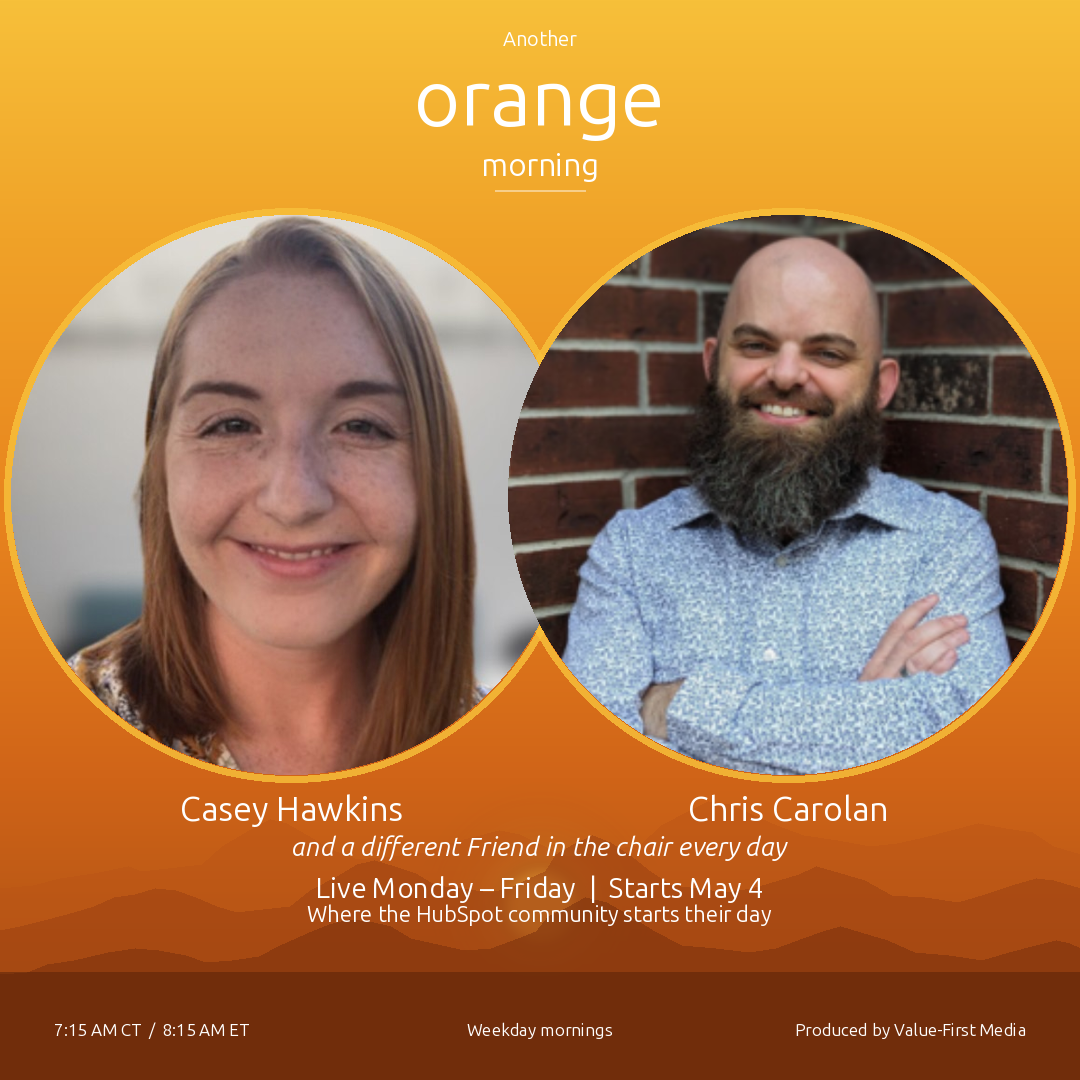
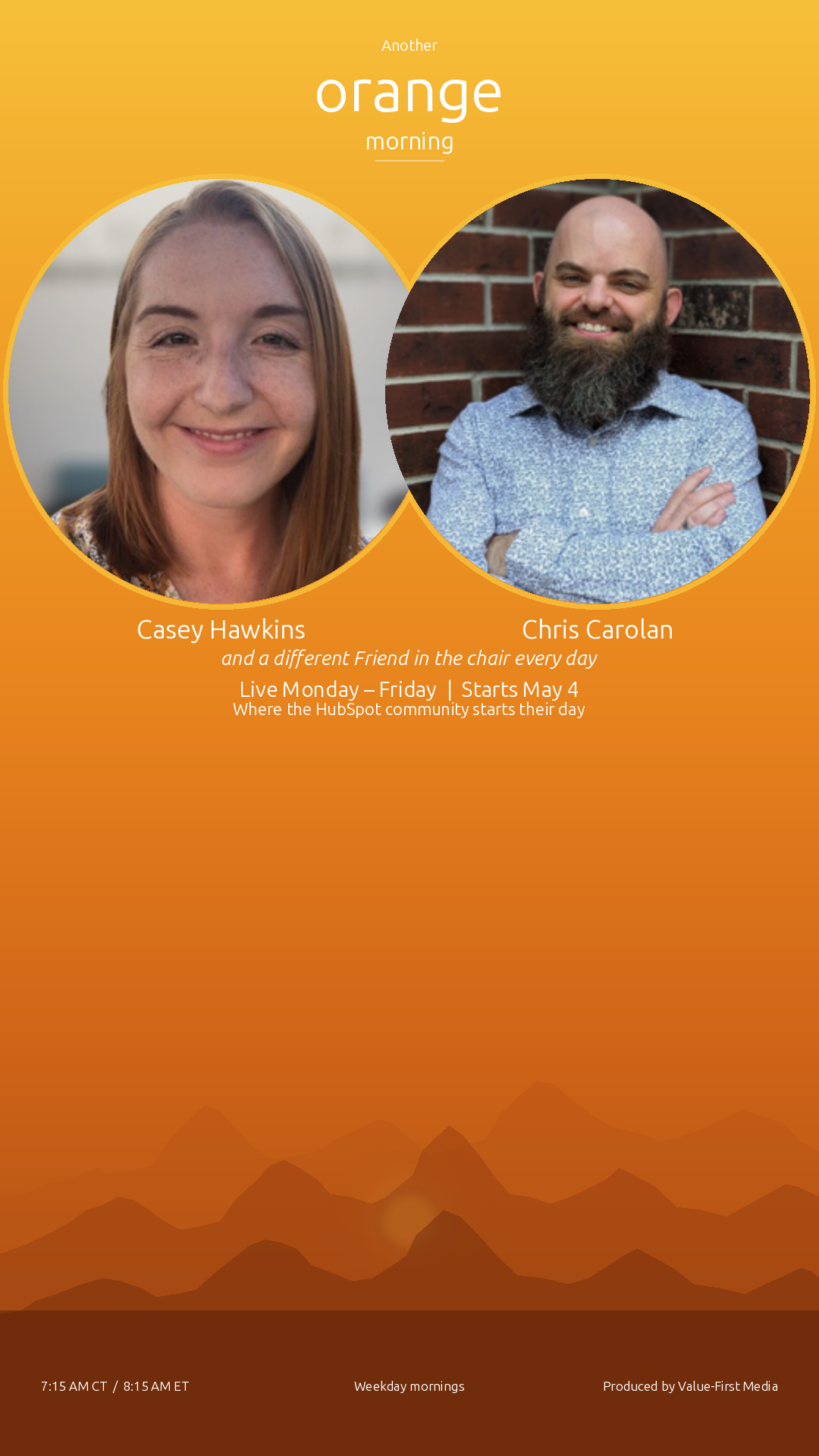
By Casey Hawkins and Chris Carolan
There's a strange gap in the HubSpot ecosystem.
The platform ships features at a pace that would embarrass most of its competitors. INBOUND drops two hundred updates in a single keynote. The community is sharp, the partner network is deep, the documentation is — fine. There's no shortage of content telling you what shipped.
What there isn't, as far as we can find: a daily, peer-to-peer conversation that pressure-tests the updates honestly, that doesn't read like a sponsored recap, and that builds an archive you can actually search later when you need to remember whether Deal plus Stripe plus subscription trigger was a yes, a no, or a cursed-but-technically-yes.
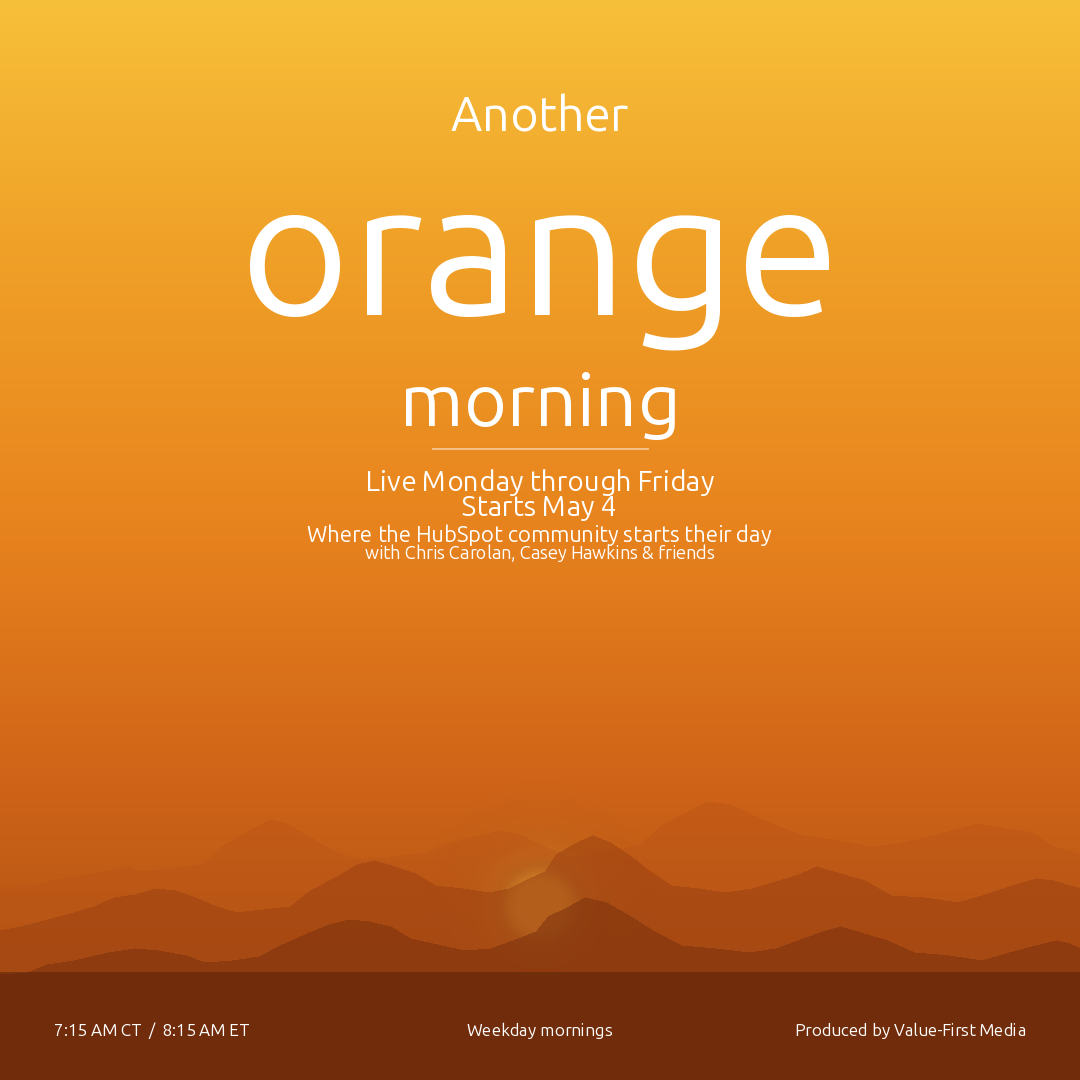
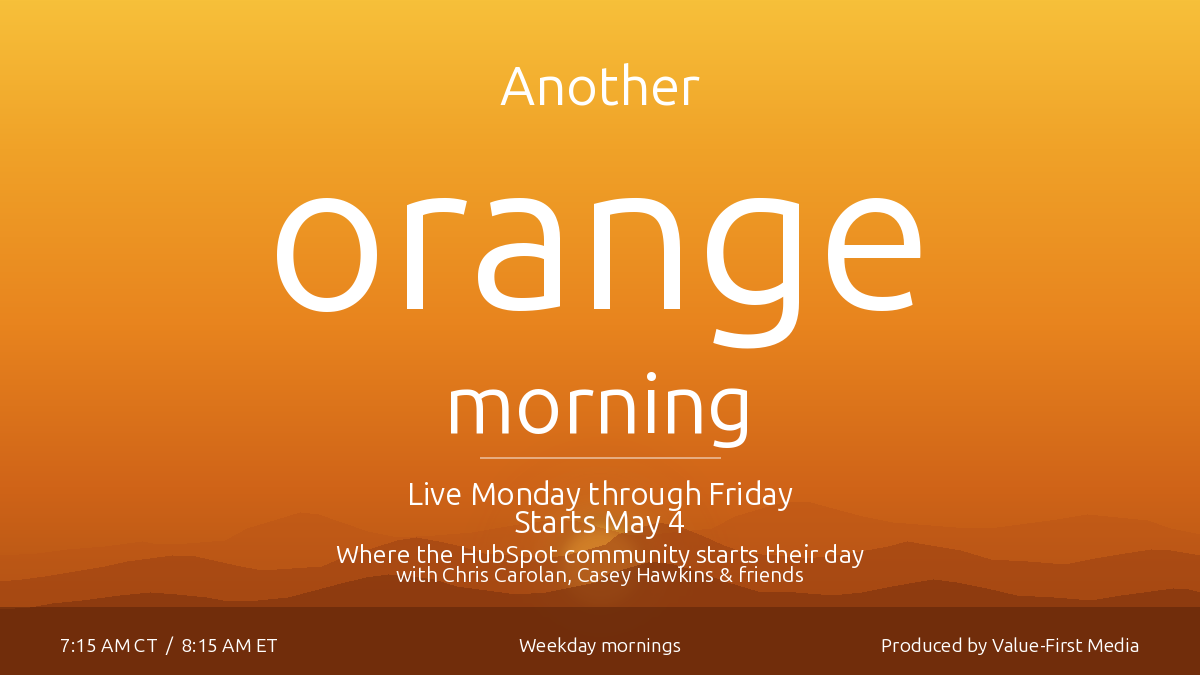
So we're starting one. It's called Another Orange Morning, it airs weekday mornings at 7:15 AM Central on LinkedIn Live, and Monday May 4 is the first official broadcast. This is the part where we tell you why we built it and what we built into it on purpose.
The show we kept wishing existed
Most HubSpot content lives in one of two modes. There's the marketing recap — release notes turned into LinkedIn carousels, lightly editorialized, mostly cheerful. And there's the deep-dive tutorial — useful, but slow, and written from a place of "here's the right way" rather than "here's what we don't know yet."
Neither one is a conversation. Neither one is daily. Neither one tells you when something shipped that the marketing copy is selling harder than the feature deserves.
We wanted a third thing. A morning room. The kind of conversation Casey and I have already been having for years, just with the camera on and a Friend in the third chair. Honest about gaps in the platform — including HubSpot's own. Generous with credit to community members and partners who are actually solving problems. Comfortable saying we don't know yet, or we'd need to test that, or this update sounds bigger than it is.
The show absorbs whoever's in the chair on a given day. Casey rings the wheel and runs the implementation segments. Chris runs strategic framing and the Product Manager interviews. The Friend brings their lane — solutions partners, app partners, practitioners, people the audience already trusts. Three voices, a different third every day. The format is stable; the conversation is not. That's the point.
What we put on the schedule
The hour is 7:00 to 8:00 AM Central, and only forty-five minutes of it is broadcast. The first fifteen are the production huddle — we triage yesterday's HubSpot release feed, lock the day's three to five updates, pick an Object of the Day, confirm whoever's joining us. The wheel does not spin in the huddle. The wheel spins live.
Then we go.
Top Updates from Yesterday. Three to five things that shipped, each one getting the so what treatment — what it is, why it matters, who it affects. Strategic implications get more time than configuration depth. We paraphrase HubSpot's marketing copy; we don't read it.
Object of the Day. Six minutes on a single HubSpot object — native or custom. Either an update touched it yesterday, or it's the recurring "you're not using this right" pattern we keep seeing in client work. Becomes a searchable archive: the show where we explained the Project object. The show where we finally talked about Order versus Deal.
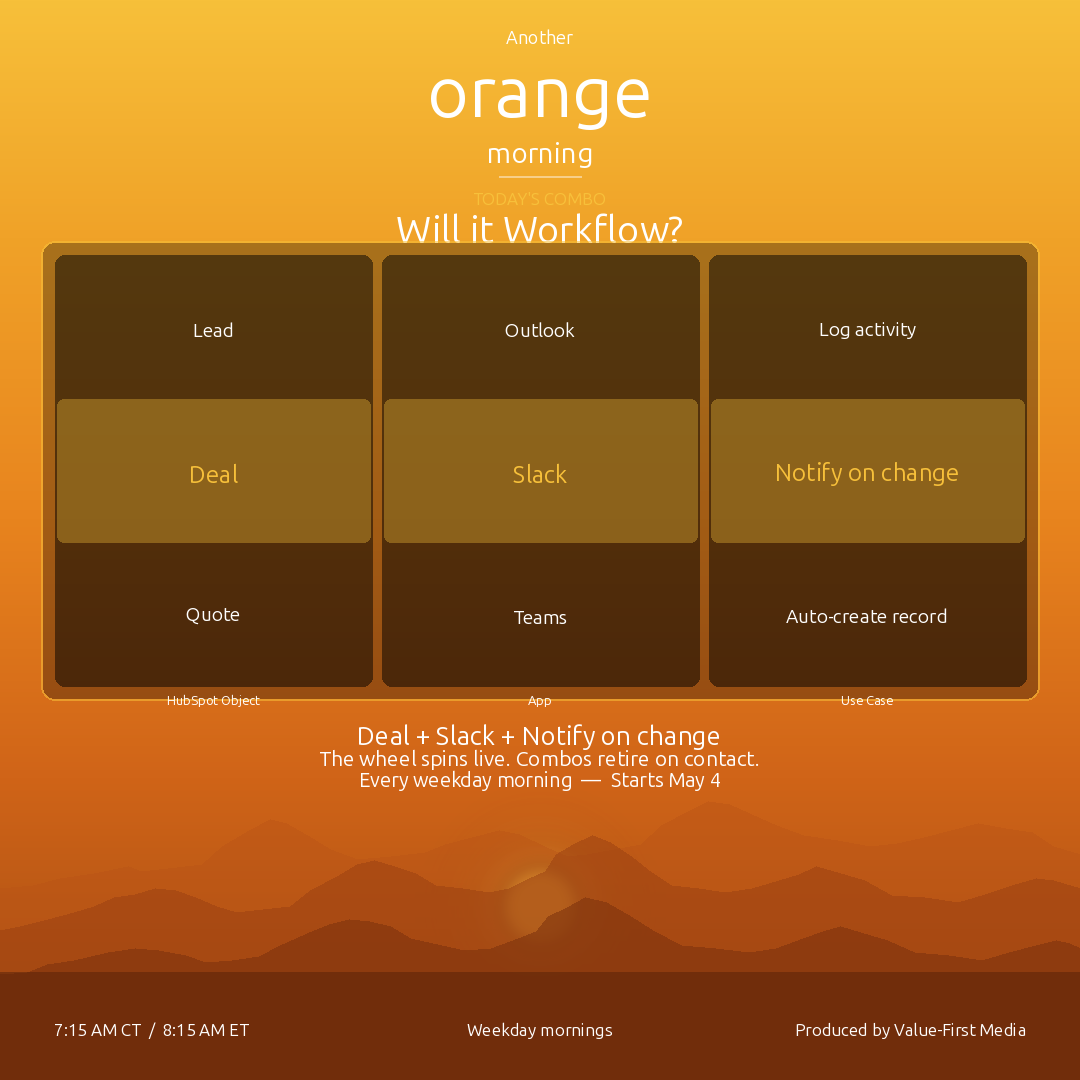
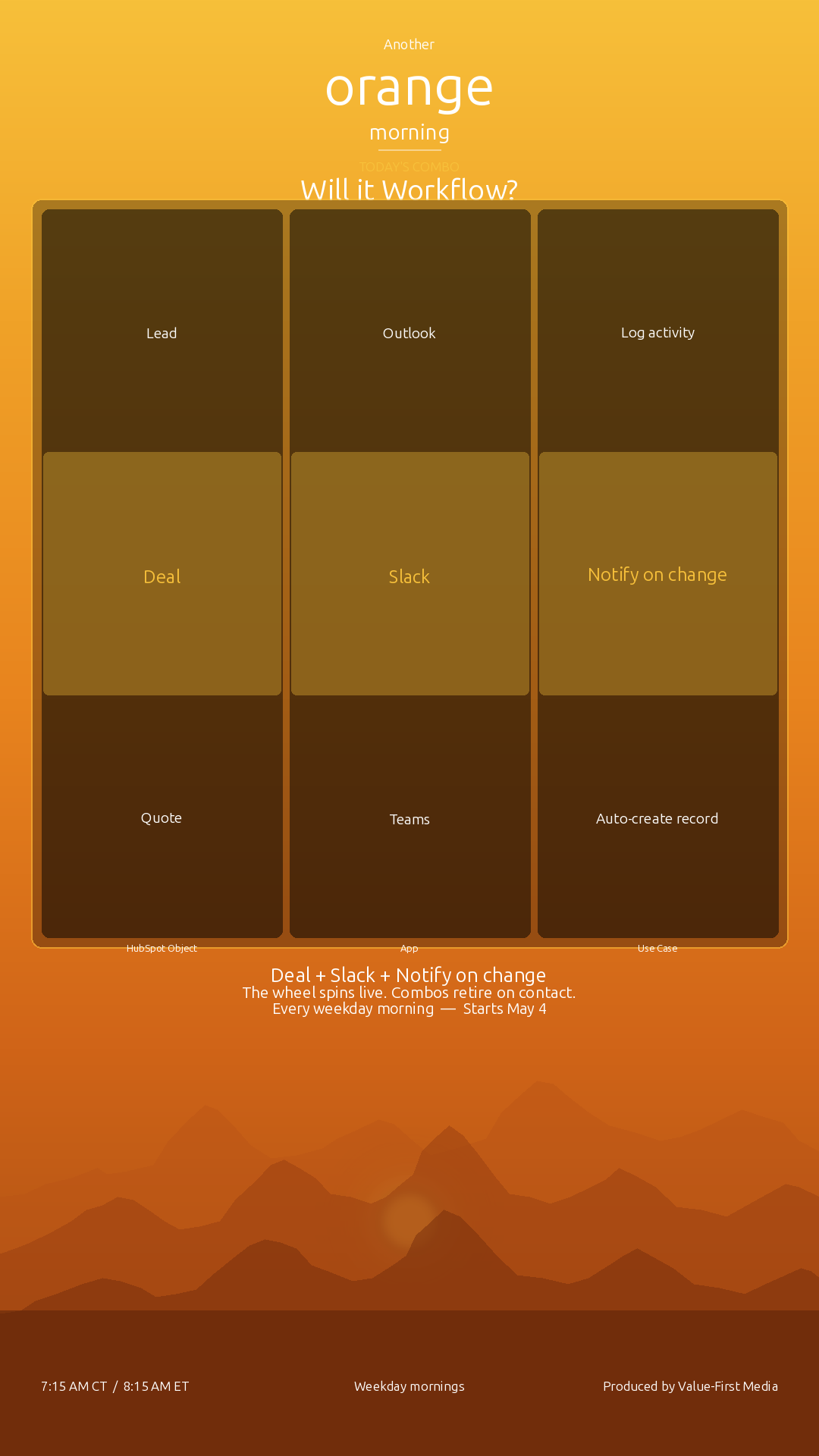
Will it Workflow? The signature segment, eight minutes of consequential conversation. Three reels — Object, App, Use Case — spin live. Whatever lands is the combo. Three questions: Will it workflow? (capability), Should it workflow? (judgment), How would we workflow it? (architecture, in object → trigger → action order).
There is a no-skip rule. Whatever the wheel returns, we work with it. A Service plus Slack plus auto-create-record question is something to think out loud about — not something to rerun until the wheel is friendlier. The awkward combos are usually the best segment of the show.
PM Spotlight or Friend Deep Dive. Twelve minutes for whoever's in the chair. When a HubSpot Product Manager joins, Chris runs the interview and Casey brings the implementation lens. When the slot is a Friend, the Friend leads, and Chris and Casey ask the questions the audience would ask.
We close the way we close. One takeaway, the signature line, tomorrow's preview, and the room empties out.
The Vault, which is the whole point
Here's the part we built deliberately, and the part that makes this show different from a podcast you forget about by Thursday.
Every Will it Workflow combo retires from the wheel. Once we feature Deal plus Stripe plus subscription trigger, that exact tuple is gone — pulled from the eligible pool, retirement persisted, never spun again. The individual values stay; the combination doesn't. Day by day, the wheel gets sparser and more interesting. The combos that survive are weirder, and the answers we have to give are more honest.
Each retired combo gets logged in a structured Vault entry — verdict, capability summary, judgment, architecture sketch, notes. Same format every time, searchable by Object or App or Use Case, linked to the episode and timestamp. Three months in, the Vault is a reference. Six months in, it's a body of work the show feeds on. The Phase 2 plan is a Throwback Wheel that resurfaces old combos with a single question: we covered this six months ago. Is the answer still the same?
This is what we mean by an archive that compounds. The format makes content multiplication structural rather than something we'd have to remember to do.
Why three voices, and why a different third every day
Two co-hosts is a cadence. Three voices in a room is a conversation that can actually surprise you.
Casey brings detail-oriented practicality — the implementation lens, dry humor, the if you're going to actually try this, here's what hits you first instinct that comes from spending years inside other people's lead scoring rules and form configurations. Chris brings the strategic frame — Commerce Hub patterns, custom object architecture, the what is HubSpot becoming read.
The third chair rotates daily because the HubSpot ecosystem is too big to perform from inside any one practice. The Friends pool is being recruited from the ecosystem's deepest practitioners — people whose lanes overlap with parts of the platform Casey and I touch only occasionally. When they're in the chair, the show moves with them. When the next Friend shows up the following morning, it moves again.
We don't ask Friends to perform a house style. The show absorbs their voice. That's a feature.
Where to find it
Live: LinkedIn Live, weekday mornings at 7:15 AM Central. The cup is already poured. Show up.
Podcast: Spotify and Apple Podcasts — the audio cut, lightly edited.
Replay: LinkedIn and YouTube for the full episode. The Will it Workflow segments will travel as standalone short-form clips, because they're the natural short-form gold of the show. Object of the Day clips become evergreen reference content. PM interviews stand alone.
Home: anotherorangemorning.com, where the Vault will live alongside the daily recap.
Network: Another Orange Morning is a Value-First Media Network show. Cross-promotion happens through the network rather than as in-show plugs.
The kicker
The signature line of the show closes the lesson rather than opening the door:
You probably already own the solution you're looking for — you just need to wake up to it.
We mean this almost literally. Most HubSpot teams are running on a fraction of what their portal can actually do. The Order object you've been ignoring is the revenue source of truth. The Service object you're using as a glorified ticket queue is built for delivery health. The custom object you were about to spec out is probably a property and an association away from being unnecessary.
The platform you're underusing is the one you already pay for. We're going to spend forty-five minutes a morning, five mornings a week, helping you wake up to it.
See you Monday at 7:15.
— Casey, Chris, & Friends